
Last updated November 21, 2026
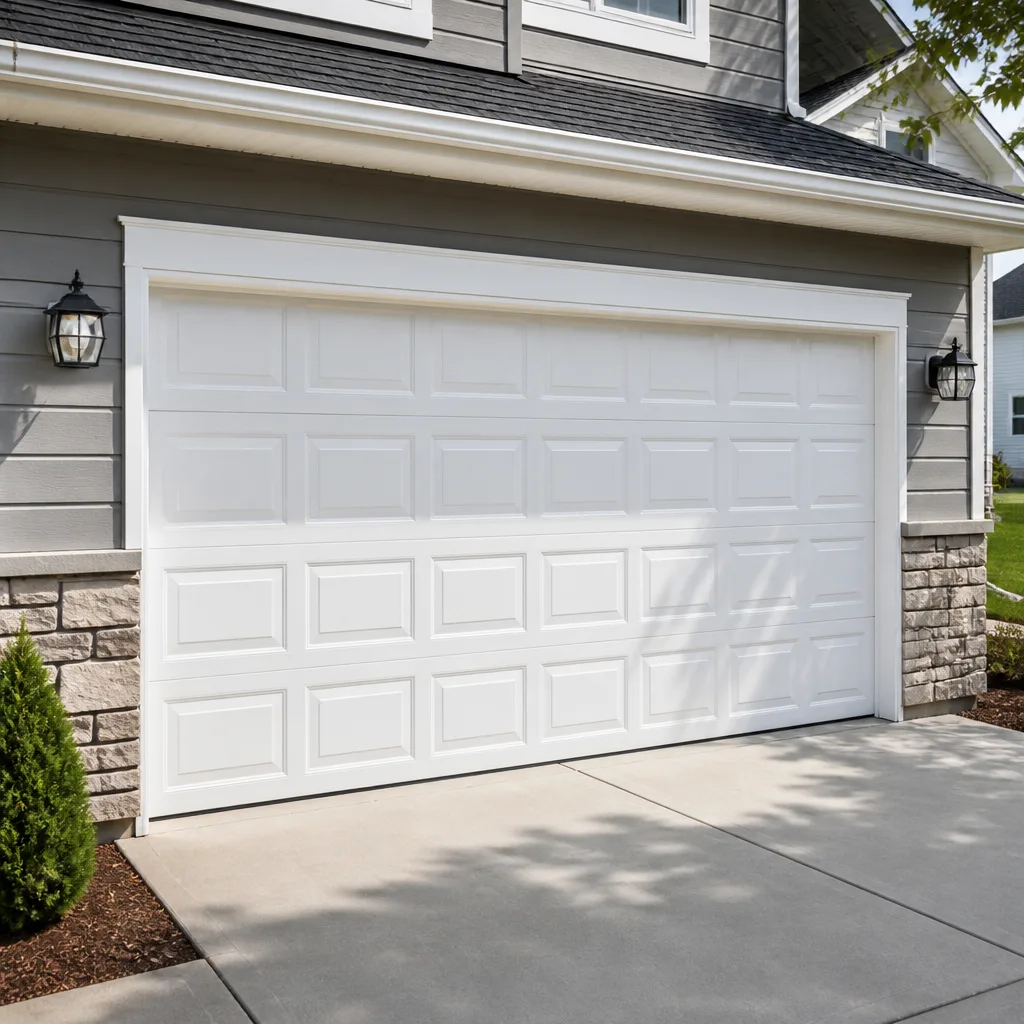 Raised-panel steel
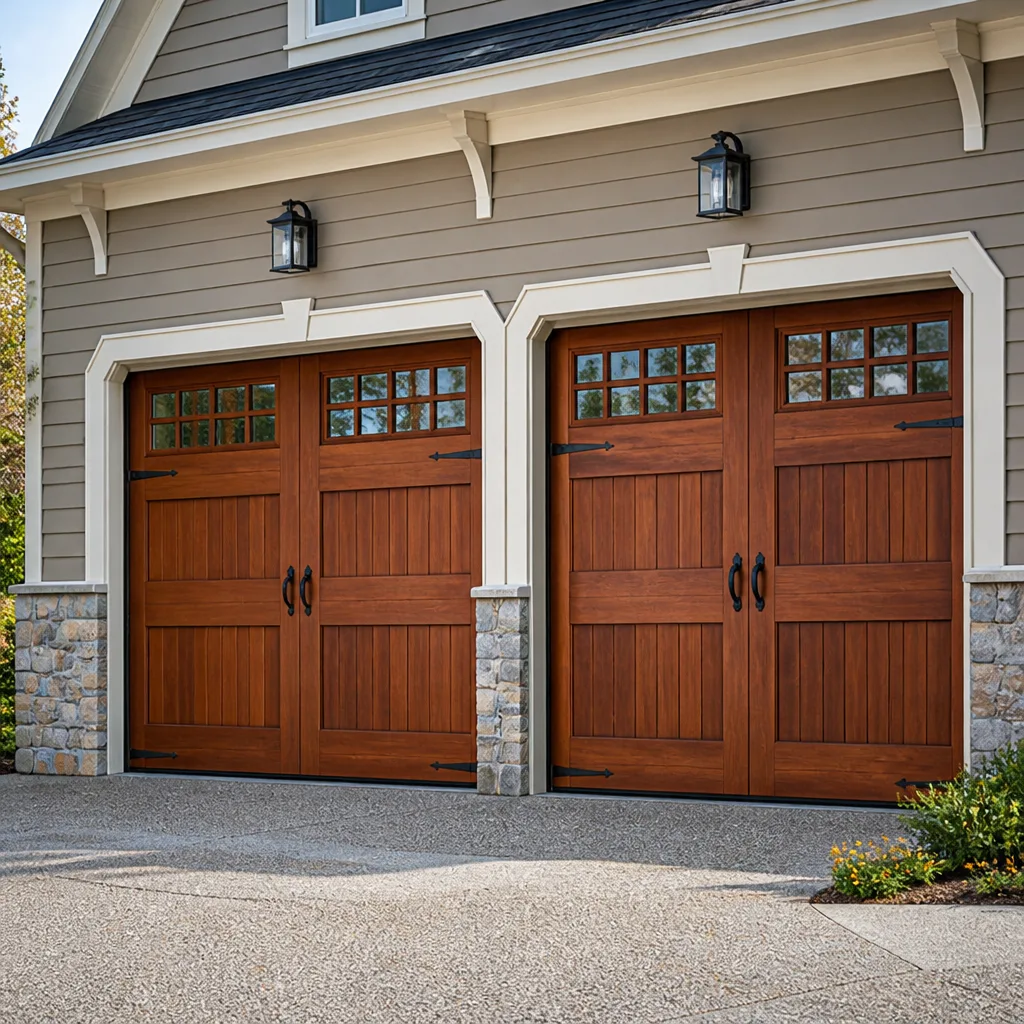 Carriage house
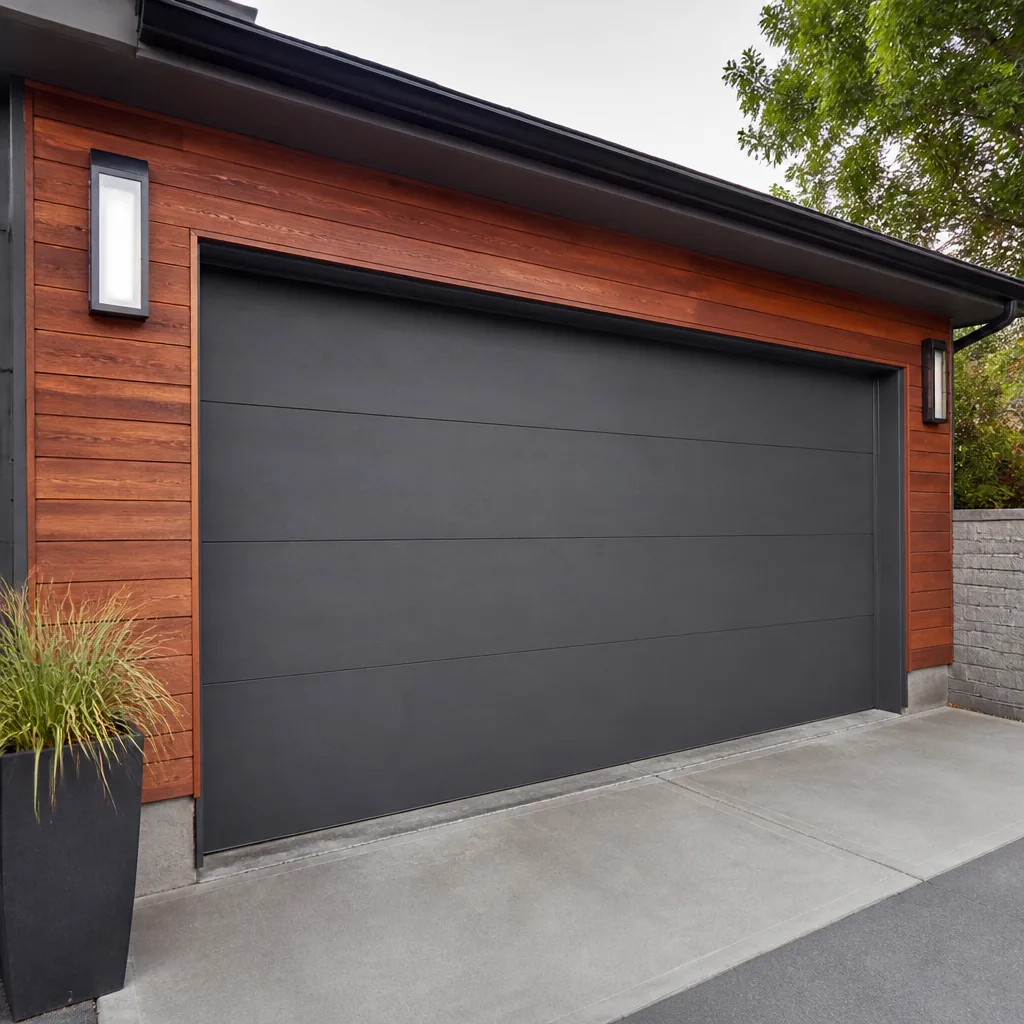 Modern flush
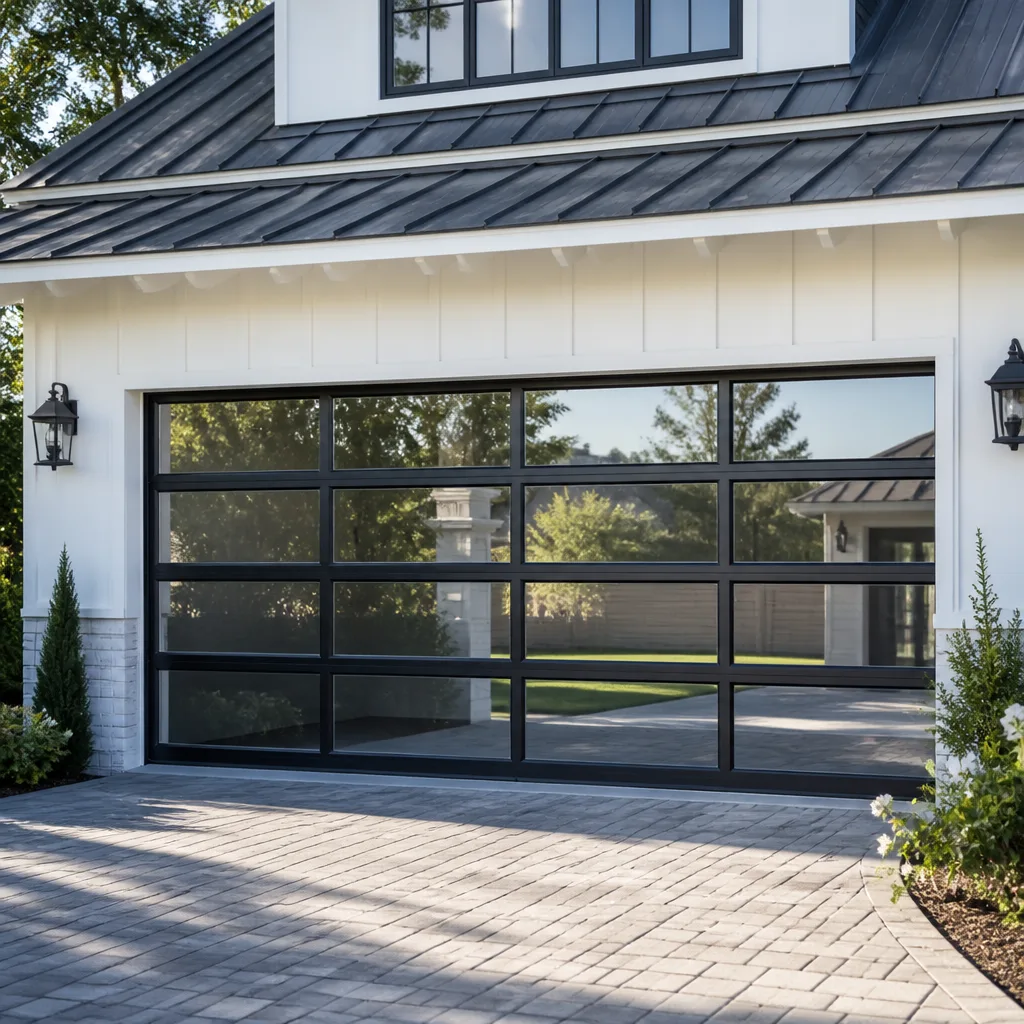 Full-view glass
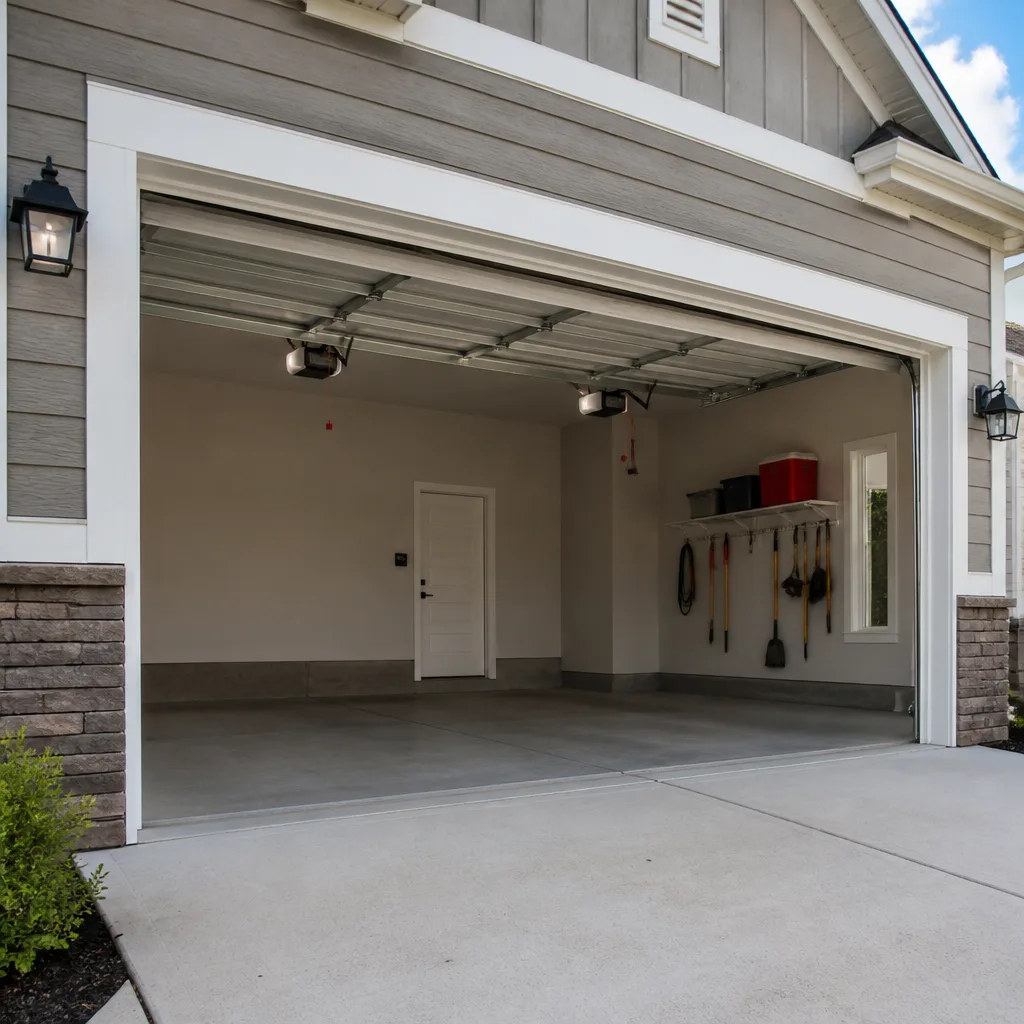 LiftMaster openers
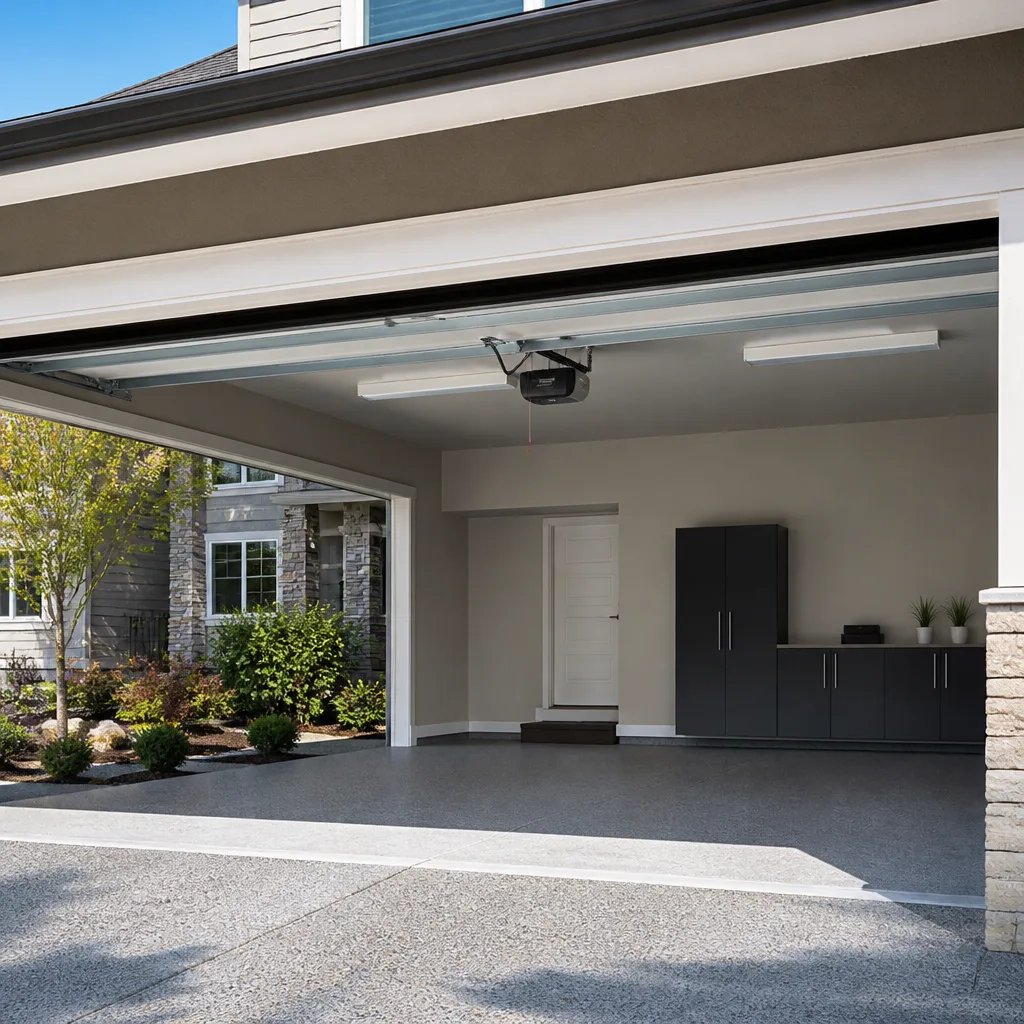 Chamberlain openers
Full 25-point door and opener safety check with every visit - springs, cables, rollers, tracks, and your LiftMaster or Chamberlain opener included
You get a price before we start. It does not change when the pro arrives.
Get your free estimateSeasonal Garage Door Care for Tacoma: Year-Round Homeowner’s Guide
Most seasonal garage door guides are written for a climate that doesn’t exist here. They warn about December, then move on, as if Tacoma ran on the same four-season clock as the Midwest. It doesn’t. Tacoma has a long wet season from roughly October into May, a short dry summer in July and August, and two shoulder periods in between where the weather swings hard and fast. The month that actually breaks the most doors here isn’t December – it’s October, when the first heavy rain lands on hardware that dried out all summer, temperatures start moving, and leaf debris is everywhere at once. This guide walks through garage door care on Tacoma’s real calendar rather than the generic template, so you know what to check and when.
Quick Answer
Seasonal garage door care in Tacoma follows the region’s actual weather, not the standard four-season template: the highest-risk window is September through November, when the first heavy rains meet temperature swings and falling leaves. Check and lubricate moving parts before that window, protect wood and vinyl from July-August UV exposure, reseat the bottom seal before the November rain, watch for freeze-related sticking during Tacoma’s occasional cold snaps, and inspect hardware for rust and cable fraying each spring.
Styles & brands we work with
- Raised-panel steel
- Carriage house
- Modern flush
- Full-view glass
- LiftMaster openers
- Chamberlain openers
Table of Contents
- Why October Is the Riskiest Month for Garage Doors in Tacoma
- Fall Prep: What to Do Before the November Rain Arrives
- Summer Care: UV Damage During Tacoma’s Dry Stretch
- Winter Protocol: When a Tacoma Cold Snap Freezes Your Door
- Spring: Inspecting Hardware After Six Months of Wet Weather
- The Tacoma Monthly Check: A Short Monthly Routine
- Bottom Seals and Weatherstripping: Protecting Them So They Last
- What You Can Do Yourself and What Needs a Technician
Why October Is the Riskiest Month for Garage Doors in Tacoma
October is the month that breaks garage doors in Tacoma, and it’s not because of anything dramatic. It’s the combination. After a dry summer, every pivot, roller, and hinge has shed most of its lubrication. The first sustained rain arrives and finds bare metal. Temperatures start taking wider swings between day and night. And the leaf drop puts grit and moisture into the tracks daily. All of that lands on the same components at the same time.
The mechanical stress doesn’t come from any single factor. It comes from several smaller stresses stacking up. A torsion spring that’s been working through a dry summer is already near the end of its cycle count. Add the stiction that builds when cold metal meets morning damp, and the door starts asking the spring for more force than usual. That’s when a spring that was “fine in August” snaps in the first week of wet weather.
Here’s what we’ve found most useful to understand about the October risk: it compounds. A door that’s slightly out of balance in summer will stress the opener motor more each week once the tracks get gritty. Rollers that roll freely in dry weather start to hesitate once moisture works into the bearings. Fall is when all of that accumulated wear shows up at once.
Tacoma’s older homes make this worse in specific ways. Neighborhoods with mature trees – North End streets, the blocks around Wright Park, much of the West End – see the heaviest leaf and debris load, and homes where the door faces the weather take the brunt. If you’re near the water-facing slopes, the afternoon wind drives rain into the door face harder than the roof overhang suggests.
What to do before the October window hits
- Walk the door by hand in late September with the opener disconnected. If it doesn’t lift smoothly and stay where you leave it, it’s out of balance and needs adjustment before the rains.
- Lubricate the moving metal. Hinges, rollers, and the torsion bar bearings get a garage-door lubricant – not motor oil, not WD-40, and never on the tracks themselves. Rollers with sealed bearings take it sparingly.
- Clear the tracks and the driveway. A daily sweep of leaf debris from the track channel during October prevents most of the gritty rolling that dulls the whole system.
- Test the safety reverse. A door that fails the reverse test is a hazard regardless of the season. Ours should be done monthly, and October is when many people first remember.
- Book a spring inspection if the door is more than five years old. Springs aren’t something to check by eye – the spring repair side of the work is genuinely hazardous, and only a trained technician should handle or inspect it.
If a spring does go during that first wet stretch, the safest move is to stop using the door and call. For garage door repair that includes spring service, the timing matters – a snapped spring puts the full weight of the door on the opener and cables, and forcing the door open makes it worse. Tacoma Garage Door Repair Pros offers free estimates on that work when you call (844) 709-1359.
Fall Prep: What to Do Before the November Rain Arrives
Between mid-October and the first of November, the work that prevents the most winter trouble is the work you do on the seals and the frame. November is when Tacoma’s rain turns sustained, and a bottom seal that’s already cracked or flat won’t recover. Water tracking under the door, into the track channel, and onto the concrete is how rust starts in the roller shanks and how the channel itself gets slippery enough to catch a roller.
Take a look at the bottom seal before the heavy rain starts. A healthy seal sits flat against the ground with no gaps and no visible daylight from the inside. Run a hand along it – if the rubber is stiff, cracked, or missing chunks, it’s time to address it. Don’t wait until water is already coming in. Replacing a bottom seal is a modest repair; letting a failing seal sit through a wet season is what leads to a rusted track and a door that needs a larger repair later.
Fall prep checklist for Tacoma
- Bottom seal: Check for cracks, compression flats, and daylight gaps. Reseat or replace before November.
- Side and top weatherstripping: Look for missing nails, curled edges, and gaps at the corners. Small gaps let wind-driven rain in.
- Lubrication: Hinges, rollers, and springs get a fresh application of garage-door lubricant for the wet season.
- Track condition: Clear grit from the channel, and check the mounting of the vertical track. Loose lag bolts are common after a dry summer of expansion and contraction.
- Opener force settings: If the opener seems to struggle more than last year, don’t turn the force up as a fix. It’s usually a sign of friction in the door, and turning up the force masks the problem while wearing the motor.
- Drainage check: Make sure the concrete apron in front of the door slopes away. Standing water at the threshold is a problem no seal fully solves.
Why the top and side of the door face needs a look in fall
Most homeowners focus on the bottom of the door because that’s where the water comes in. But the wind-driven rain in a November storm comes at the face of the door nearly sideways on exposed properties. Look at the top weatherstrip and the sides. On wood doors, check the trim and the bottom rail for soft spots or paint failure. On steel doors, look for rust starting at the bottom edges, where water can sit after a storm. Those small failures, caught in October, are cheap to fix. Postponed to January, they tend to be bigger jobs.
For a door that needs adjustment rather than repair, this is also the right time to have the balance and travel limits checked by a technician. A properly balanced door puts less demand on the whole system all winter. And if you’re considering a replacement door that will handle the climate better over time, fall is actually a sensible season to start the conversation – for the replacement side of the work, the crew can help with garage door installation and measure for a proper fit before the wet season.
Summer Care: UV Damage During Tacoma’s Dry Stretch
The most ignored seasonal problem in Tacoma is the one that builds during July and August. Our dry stretch is short, but it’s also sunny, and it comes after eight or nine months of mild, overcast conditions. A door that’s already slightly weathered doesn’t have much reserve, and UV exposure is cumulative. Three or four weeks of direct sun at this latitude does more exterior damage than most homeowners expect.
Wood doors take the hardest hit. A door that’s still in decent paint is protected. A door with a south- or west-facing panel that’s chalky, faded, or starting to flake is losing its topcoat, and bare wood under UV oxidizes and cracks. Once the grain starts checking, water gets in for real. If you paint wood doors, summer is the season to check the coat and touch up before the rain comes back. A well-maintained paint skin is cheaper than any repair that follows water intrusion.
Vinyl doors fade and get brittle with UV exposure too, though the effect is slower. The color fastness has improved with each generation, but a vinyl door with heavy sun exposure and no shade will eventually dull. Clopay vinyl doors, for example, are rated for sun exposure, but like any material, they benefit from being kept clean and cared for. Look for chalkiness, fading on the sun-facing panels, and any cracking at the panel edges or seams.
Steel doors in Tacoma handle the UV load fine, but the paint finish is what fails first. If paint is chalking or a panel has a scratch that’s holding moisture, water can work under the coating and lift it, then rust. Touch up bare spots before fall.
What to check during the summer stretch
- Paint condition on all door types, especially wood and the bottom rail where water accumulates.
- Fading and chalking on vinyl doors, especially the panels facing the afternoon sun.
- Panel movement and warping on wood doors, since expansion in dry heat can cause separations.
- Seal condition on the bottom and sides – this is when they dry out and crack, before the rain finds them.
- Gaps at seams on multi-panel doors, which widen in dry weather and let water in come November.
Don’t wait for a problem to show up to have the door checked. Summer is when a technician can assess wear without urgency. A free estimate on any issue is available from Tacoma Garage Door Repair Pros – call (844) 709-1359.
Winter Protocol: When a Tacoma Cold Snap Freezes Your Door
Tacoma doesn’t get deep sustained cold often, but it does get short freeze events – a cold surge that drops temperatures well below freezing for a few days before easing. When that happens, garage doors freeze. The bottom seal sticks to the concrete, or the door itself freezes into the weatherstrip at the frame. It’s rare, but when it happens it damages the seal and can strain the opener if the door is forced.
The safe response when a door is frozen to the floor seal is to not run the opener. Don’t pull on the manual release either if the door is under tension. The right first move is to break the ice bond at the threshold without cutting or prying the rubber. Warm water poured along the bottom seal, or a heat gun kept moving and never allowed to sit on the rubber, will free it. Once the door is free, open it slowly by hand to check for any remaining hold before you let the opener take over.
The longer-term response to a freeze event is to prevent the bond. A dry seal is less likely to bond than a damp one. After a rainstorm followed by a freeze – which is exactly Tacoma’s pattern – wipe the bottom seal dry and dust it lightly with a silicone spray or talc. This is a small task but it saves the seal.
Winter checklist for Tacoma
- Listen before you open. After a freeze, run the opener briefly and listen. If the door stalls, stop – don’t force it.
- Free a stuck seal with warmth, not with force. Warm water or a moving heat gun, never a shovel or a pry bar.
- Dry and dust the bottom seal after wet weather and before a forecast freeze.
- Clear snow and ice from the apron in front of the door so meltwater doesn’t pool at the threshold and refreeze overnight.
- Check the tracks for ice at the bottom of the vertical run. A build-up there can catch a roller and twist the track.
- Watch the opener’s behavior. A door that opens fine in December but labors in a cold snap is telling you the bottom seal or track is binding.
If the door has frozen and something has bent, broken, or torn, that’s a repair call rather than a care task. The team handles emergency situations and can help get a Tacoma door moving again. Call (844) 709-1359 – we answer 24/7, and a call outside dispatch hours is booked into the next opening, Sunday through Friday, 7am to 7pm.
Spring: Inspecting Hardware After Six Months of Wet Weather
Spring in Tacoma is when you find out what the wet season did to the hardware. Six months of rain, damp air, and grit takes a toll on every metal part. The damage is usually visible once you know where to look. What follows isn’t a list of things to fix yourself – much of it needs a trained technician – but a list of what to look for so you know when to call.
What to look for after the wet season
- Rust on hinges, roller shanks, and the torsion bar. Surface rust on these parts is normal after a wet season, but heavy flaking rust or rust that’s seized a roller bearing means replacement.
- Cable fraying. Look at the cables on both sides of the door. Frayed strands, kinks, or cables that have gone slack are a serious safety sign. Cables are under high tension and should never be touched or adjusted by anyone but a trained technician.
- Track corrosion. Look at the inside face of the vertical track and at the bottom of the horizontal run. Rust pitting in the channel means grit is going to catch in the rollers and stress the whole system.
- Spring appearance. Surface rust on a torsion spring isn’t necessarily a problem, but a visibly stretched or twisted section, or a spring that’s visibly displaced out of its coil, is worth an inspection. Springs are under extreme tension – this is not a DIY repair.
- Door balance. Disconnect the opener and lift the door by hand. It should move smoothly and stay where you leave it. If it falls, sticks, or fights you, it’s out of balance and the door needs adjustment.
- Weatherstrip dry-out. After a wet winter, the bottom and side seals are more likely to have cracked or hardened. A seal that fails in spring means water in the door all summer.
If you’re noticing rust building patches on the bottom edge of a steel door, paint touch-up in spring is part of the seasonal care. Clean the area, dry it, and get a coat of paint on bare spots before summer UV gets to them. Same on wood trim.
The Tacoma Monthly Check: A Short Monthly Routine
Most of what goes wrong with a garage door is detectable before it fails. A quick once-a-month routine takes about ten minutes and catches the majority of the problems a seasonal guide would otherwise meet in hindsight. Here’s the check we recommend for a Tacoma door.
- Listen. Open and close the door once and listen. Grinding, popping, or a rattle that wasn’t there last month is early warning.
- Look under the door. With the door closed, look for daylight showing at the bottom seal or sides.
- Test the safety reverse. Put a small object in the door’s path; the door should reverse on contact. This is a required safety feature.
- Test the photo-eye sensors. Wave a hand in front of the sensors to break the beam; the door should reverse. Genie and Chamberlain openers use the same style of sensors; the test is the same for both.
- Check balance. Once a month, disconnect the opener and lift the door halfway. It should stay. If it won’t, it’s out of balance.
- Clear debris. Clear the tracks and the driveway of grit, leaves, and anything that can roll into the channel.
Lubrication, don’t skip it. Hinges, rollers, and pivot points get a light garage-door lubricant monthly in the wet season. Not on the tracks. Lubricated tracks collect grit and cause the door to bind.
On older LiftMaster or Craftsman openers, the monthly check is also a good chance to look at the opener’s indicator lights. A flashing error code tells you the opener has detected a fault or a safety-trip. If you see a flashing code, the fix could be as simple as aligning the sensors or as involved as a garage door opener repair – either way, it’s worth a conversation rather than guessing.
Bottom Seals and Weatherstripping: Protecting Them So They Last
The single most effective thing you can do to extend the life of a garage door seal in Tacoma is keep it clean and dry. Seals fail from the top down: dust and grit get into the seal material, the rubber dries and cracks, and the seal starts to leak. Cleaning the bottom seal once a month during the wet season with a damp cloth removes grit and prevents the cracking that leads to annual replacement. A seal that’s cared for doesn’t need replacing every year, which is the pattern many Tacoma homeowners fall into.
Winter care for the seal means drying the bottom edge after wet weather, especially before a forecast freeze. Summer care means checking that sun exposure hasn’t hardened the rubber. Fall care means checking the seal before the rain comes. Spring care means checking for cracking after a wet winter, and treating any bare wood trim with paint or sealer.
How to know a seal needs replacing rather than maintaining
- It’s visibly cracked, torn, or missing pieces.
- It’s compressed flat to the point where raising the door doesn’t spring it back.
- It’s hardened – a healthy seal is flexible enough to press a thumb into.
- Water is coming in under the door in a storm, even with the door closed.
Replacement seals come in several types and thicknesses. The right seal for your door depends on the door model and threshold, so matching the seal to the door matters. Tacoma Garage Door Repair Pros can size and fit a replacement seal that works with your door – free estimates are available by calling (844) 709-1359.
What You Can Do Yourself and What Needs a Technician
Most of the seasonal care in this guide is genuinely DIY-friendly: cleaning, lubricating, inspecting, checking the reverse and the photo-eyes, clearing debris from the tracks, and touching up paint. Those routines are what keep a Tacoma door running between technician visits. Some of the work, though, is not something to take on yourself – and it’s important to know where the line is.
Safe to do yourself
- Lubricating the moving parts (hinges, rollers, pivots).
- Cleaning the tracks and clearing debris.
- Testing the safety reverse and the photo-eye sensors.
- Checking the balance by hand with the opener disconnected.
- Touching up paint on steel or wood doors.
- Drying and dusting the bottom seal.
For a garage door technician
- Spring work of any kind. Torsion and extension springs are under extreme tension. They can cause serious injury in a fraction of a second, and a spring failure is the most dangerous garage door failure.
- Cable adjustment or replacement. Cables are under extreme tension and need the right handling and tools.
- Track straightening. A bent track can be corrected, but the fix needs the door weight off the track and the geometry checked afterward.
- Adjusting opener travel or force. If the opener is laboring, the cause is usually the door, not the opener; adjusting the settings masks it and wears the motor.
- Replacing rollers, hinges, or the torsion bar. These are the load-bearing parts, and a door that fails while you’re under it is a serious hazard.
We’re specialists in the mechanics of garage doors, not general handymen. Our technicians have up to 15 years of experience, and we work on whatever brand is on your door – LiftMaster, Chamberlain, Genie, Clopay, and the other major brands. You can see our full lineup on the Tacoma Garage Door Repair Pros homepage.
Common Mistakes to Avoid
- Waiting until December to prep for winter. By December, the damage window in Tacoma has already passed. The first heavy rain comes in October, so the prep belongs in September and early October, before the weather turns.
- Lubricating the tracks. The instinct is to oil anything that squeaks. Tracks are the exception – a lubricated track collects grit and the door binds. Oil the hinges and rollers, keep the tracks clean and dry.
- Turning up the opener force instead of fixing the door. When a door starts to struggle, the opener force setting is the symptom, not the cause. A door that needs more force is a door with friction in the tracks or a balance problem. Turning up the setting gets you through one more week and burns out the opener.
- Forcing a frozen door open. During a Tacoma freeze event, the door can stick to the bottom seal. Forcing it with the opener, or prying at the seal with a tool, tears the seal and can stall the motor. Warm the seal instead.
- Skipping the spring inspection because the door seems fine. Springs fail without warning, and the failure is what makes the door dangerous. A regular inspection of the hardware is the routine that catches wear before failure, not after.
- Assuming a rough-running door will “sort itself out.” Garage doors rarely improve with use. A grinding opener, a sticking door, or a seal that’s failing gets worse, and the eventual repair is usually larger than the intervention would have been.
- Ignoring summer UV care. The dry stretch in July and August is when paint and vinyl take the most weathering. Skipping the summer touch-up is what leads to the fall water damage.
See the difference
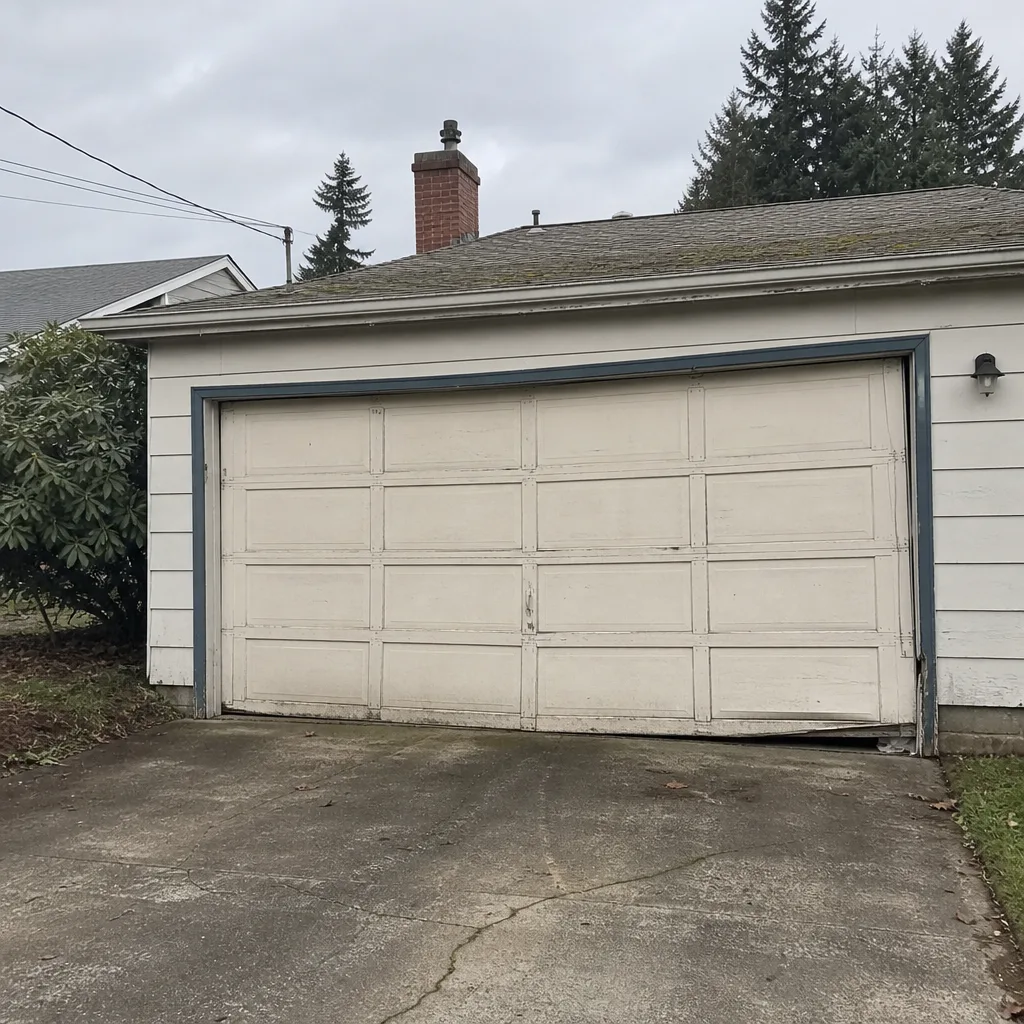 Before
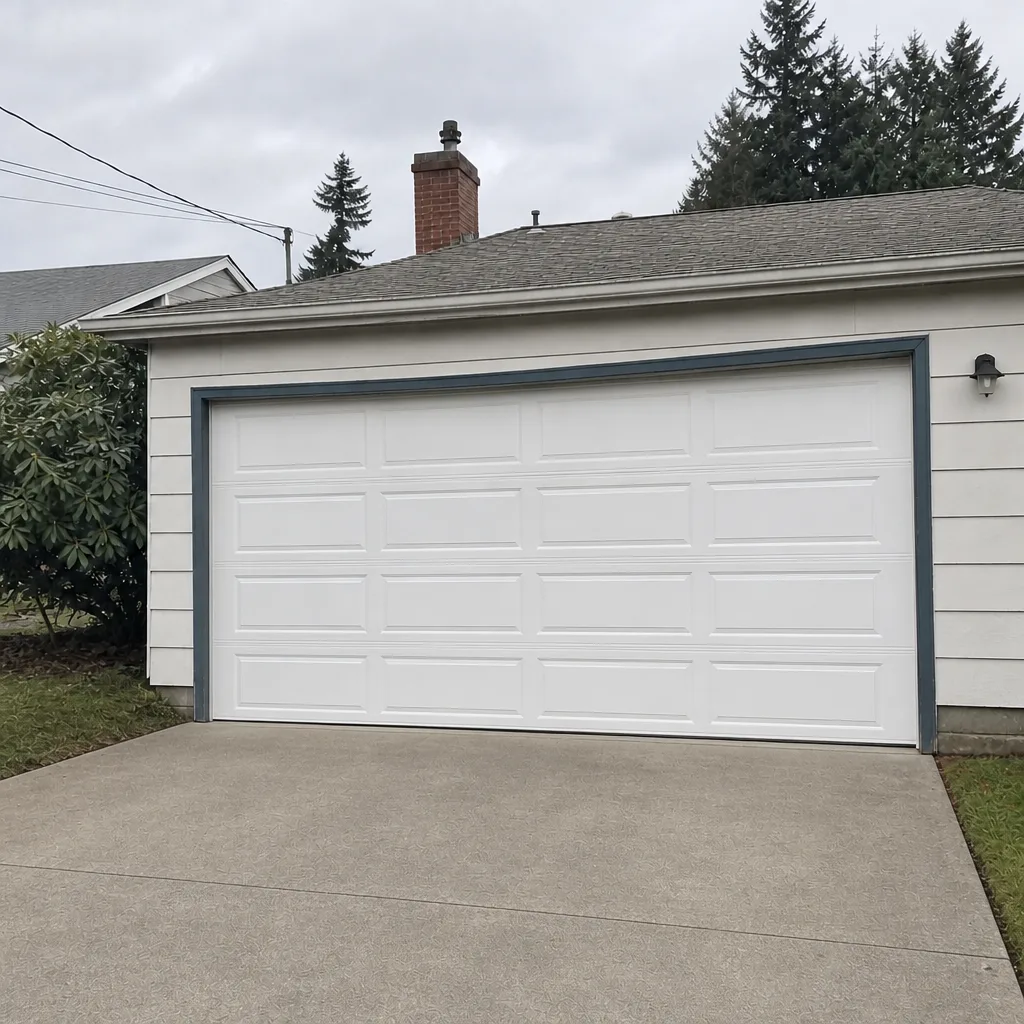 After
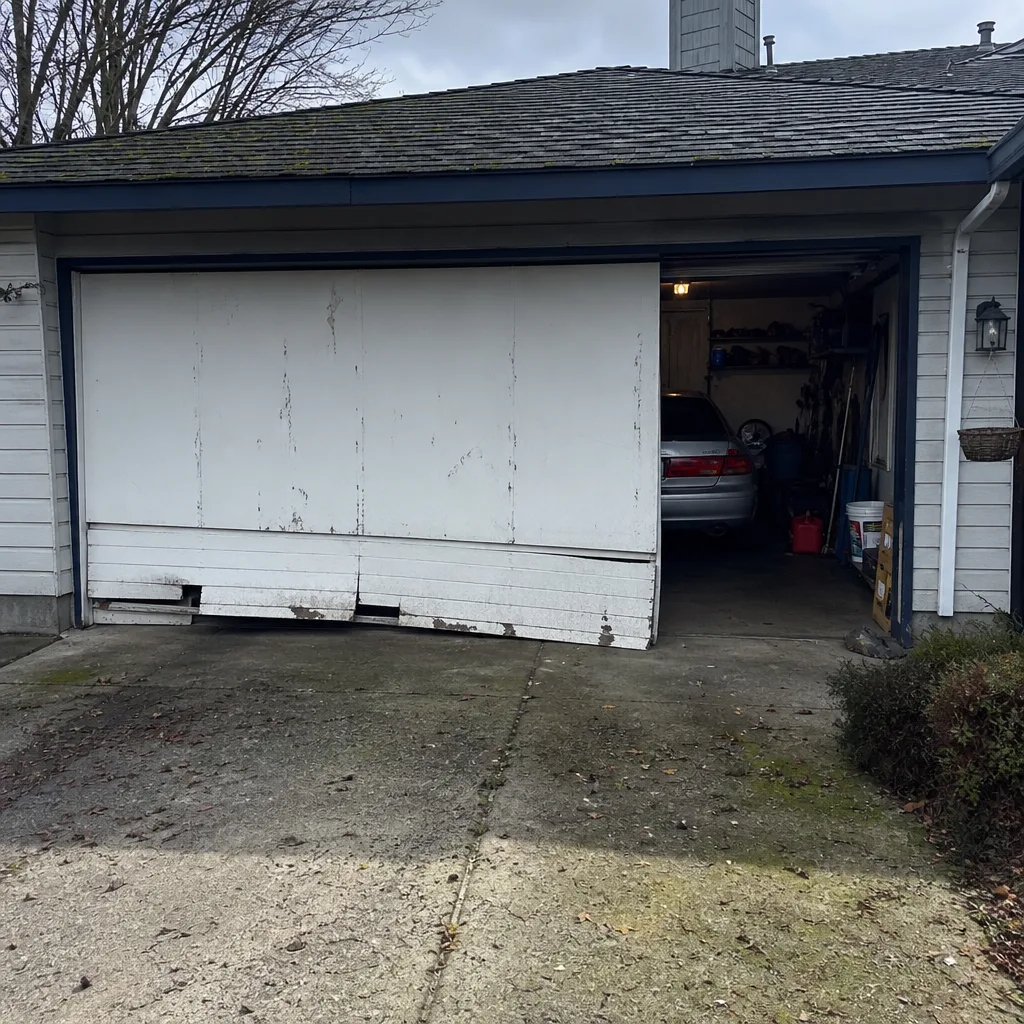 Before
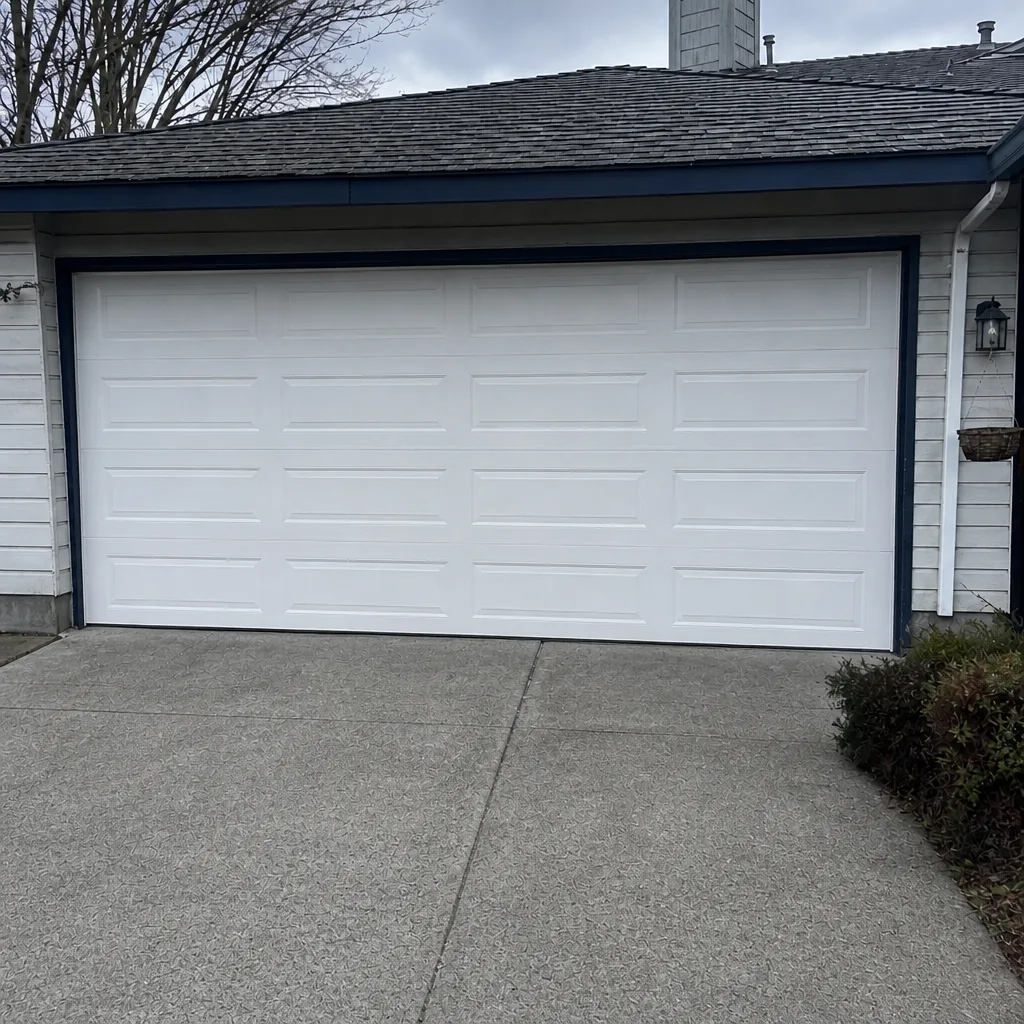 After
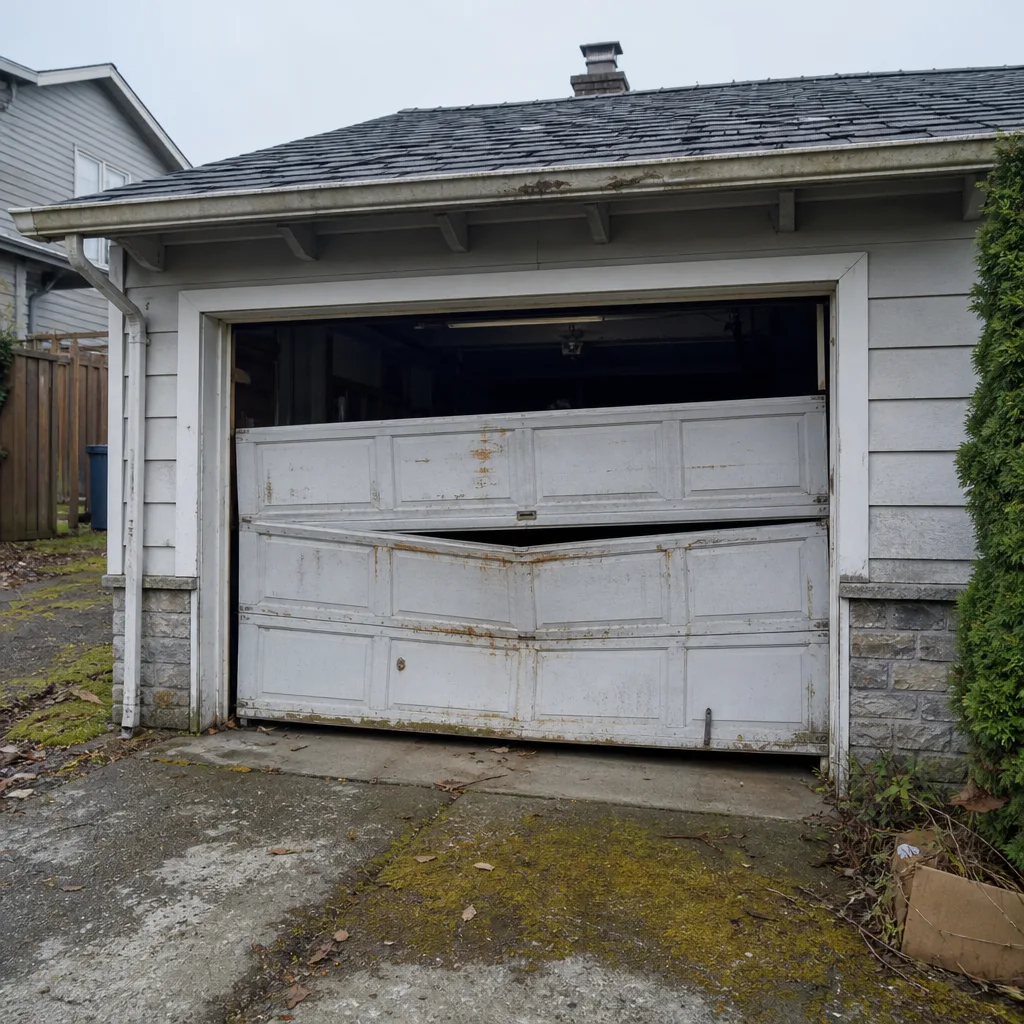 Before
 After
When to Call a Professional
Call a garage door technician when the door won’t lift by hand, when a spring has visibly broken, when a cable is slack or frayed, when the door is stuck open or stuck shut, or when the opener is tripping its safety reverse repeatedly. Those are signs something has failed or is about to, and a trained technician is the right call. Same if a track has bent or a door has been hit – the door can be repaired or the situation resolved, but not safely from a ladder and a wrench. And if a Tacoma door is frozen, jammed, or refusing to move, it’s a structural problem at that point, not a maintenance one. Tacoma Garage Door Repair Pros offers free estimates in Tacoma – call (844) 709-1359. We answer 24/7. Fast dispatch from 7am to 7pm, Sunday through Friday.
When an emergency does happen, the work is emergency service as a named offering, not an afterthought. A door stuck open is a security problem in a residential neighborhood, and a door stuck shut is a car you can’t move. Those situations call for the specialist’s line, and the team can be on-site the same day to get the door moving. For the emergency side specifically (doors that won’t move, or are structurally compromised), see garage door repair for the full picture of what’s covered.
Frequently Asked Questions
The single most important task is preparing before October, because September and October are when the highest-risk window opens in Tacoma. Lubricating the moving parts, clearing debris from the tracks, and checking balance all need to happen before the first heavy rain, not after. Call (844) 709-1359 for a free inspection if you want a technician to check yours.
A garage door should be checked monthly by the homeowner and inspected for wear by a technician seasonally, with a more thorough service before the wet season and after the winter. The monthly check catches daily issues; the seasonal checks catch the wear the weather is doing underneath.
Don’t run the opener. Warm the bottom seal with a heat gun kept moving, or with warm water poured along the seal, then lift the door carefully by hand before you let the opener take over. Don’t pry or cut the seal. If the door won’t free, or the seal tears, call a technician – estimates are free at (844) 709-1359.
Surface rust on hinges, rollers, and the torsion bar is common in Tacoma given the length of the wet season, and light surface rust isn’t a problem. Rust that’s flaking, that has seized a roller, or that’s pitting the track is more serious. Spring is the best time to check, because six months of damp weather can hide problem areas.
Many homeowners can handle a basic bottom seal replacement, but if the door model or threshold is unfamiliar, or the seal has been part of a track problem, a technician is the safer call. A replacement that doesn’t sit flat is a leak, and a leak leads to a rusted track and a bigger repair. A free estimate will tell you if the job is that simple.
Yes. Tacoma has one long wet season and a short dry summer, with two volatile shoulder seasons in between, so the standard spring-summer-fall-winter template doesn’t fit. The work that matters here is: prep before October, UV check in July and August, freeze prep in winter, and hardware inspection in spring.
The Bottom Line
The trick to keeping a Tacoma garage door working through the year isn’t a big seasonal overhaul – it’s matching the maintenance to the climate you actually live in. The October window is the risky one, and the prep that prevents the most trouble happens in September. Summer care is about UV and paint. Winter is about not forcing a frozen door. Spring is for inspecting the hardware after six months of rain. If you can run the monthly check and do the DIY-safe care, a technician can handle the rest. Tacoma Garage Door Repair Pros offers free estimates and a same-day emergency service on Tacoma doors. Call (844) 709-1359 for an estimate if you want a technician’s view of your door before the weather turns. We answer 24/7. Fast dispatch from 7am to 7pm, Sunday through Friday.
Written by the team at Tacoma Garage Door Repair Pros.