
Last updated November 21, 2026
 Raised-panel steel
 Carriage house
 Modern flush
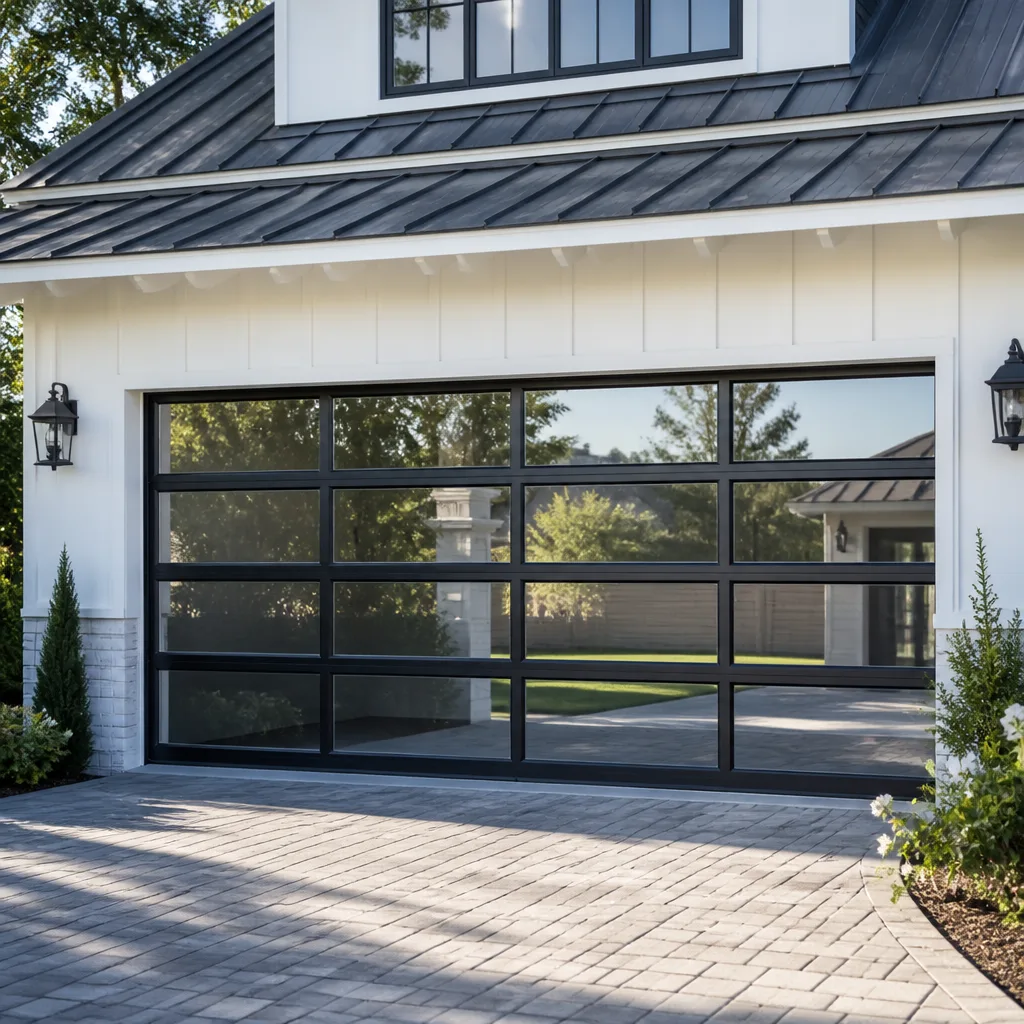 Full-view glass
 LiftMaster openers
 Chamberlain openers
Full 25-point door and opener safety check with every visit - springs, cables, rollers, tracks, and your LiftMaster or Chamberlain opener included
You get a price before we start. It does not change when the pro arrives.
Get your free estimateGarage Door Warning Signs: A Tacoma Homeowner’s Reference Guide
Most garage doors don’t fail without warning. They fail because nobody translated the warning. That half-second hesitation before the door lifts isn’t the door “getting old” – it usually means the springs are losing tension, and you’re inside the window where a cheap adjustment can save you from a snapped spring and a door that won’t budge. The sounds, movements, and visual clues your door gives you every day mean specific things about specific parts. This guide decodes those symptoms for Tacoma homeowners into a symptom-to-cause index, walks through checks you can do yourself, and gives you a three-tier triage framework: what to watch, what to schedule, and what means stop using the door right now.
Quick Answer
The main warning signs of a failing garage door are hesitation or jerky movement, grinding or popping noises, a door that closes crooked, frayed or slack cables, and springs that look stretched or show gaps in the coil. In Tacoma, rust-accelerated spring fatigue, humidity-swollen wood bottom rails, and corrosion on galvanized tracks show up earlier than in drier climates. Any door that won’t stay balanced, has a snapped spring, or has a visibly frayed cable should not be operated until a technician looks at it.
Styles & brands we work with
- Raised-panel steel
- Carriage house
- Modern flush
- Full-view glass
- LiftMaster openers
- Chamberlain openers
Table of Contents
- The Symptom-to-Cause Index: What Each Noise Actually Means
- Visual Warning Signs You Can Check Yourself
- Slow Door or Unbalanced Door? Why the Difference Matters
- Warning Signs Specific to Tacoma Conditions
- The Triage Framework: Watch It, Schedule It, or Stop
- Why Springs Fail First (and Why You Shouldn’t Touch Them)
- Opener Warning Signs: When the Problem Isn’t the Door
- A Simple Monthly Walk-Around
The Symptom-to-Cause Index: What Each Noise Actually Means
A garage door has a small number of moving components, and each one fails in a characteristic way. That’s good news for diagnosis. Instead of “something sounds wrong,” you can usually narrow a noise down to one or two suspects before anyone touches the door. Here’s the index we work from.
- Grinding: Usually the rollers binding in the track or a dry torsion bar. Grinding that starts suddenly after a cold snap often points to a roller that’s lost its bearing and is now metal-on-metal.
- Popping or snapping: Frequently the torsion spring. A single loud pop followed by a door that suddenly feels twice as heavy is the classic snap. Popping during operation can also be a cable jumping a drum.
- Squealing: Almost always friction – rollers, hinges, or the torsion bar. Squealing tends to build gradually, which is why it gets ignored far longer than it should.
- Rattling: Loose hinge bolts, a worn bottom bracket, or a track section that’s worked away from the wall. Rattling usually worsens over bumps in the track rather than across the whole travel.
- Thumping on the way down: A sign of a track that’s out of plumb or a panel that’s been knocked slightly out of square. Panels that bind create that heavy thump as they ride the rail.
If you can name the noise, you can name a probable cause, and that’s the difference between a five-minute adjustment and a door that won’t open when you need it. When you’d rather have someone listen in person, our garage door repair visits start with exactly this kind of walk-through.
What a healthy door actually sounds like
A well-adjusted door produces a low, steady hum from the opener motor and a soft roll along the track. No pops, no metal-on-metal, no slamming at the end of travel. If you can’t remember the last time your door sounded that quiet, it’s worth a listen this week.
Visual Warning Signs You Can Check Yourself
Some of the most reliable warning signs are the ones you can see from the driveway without touching anything. These are the checks we walk through with homeowners who want to know how to catch a problem early.
Cable condition
Cables run from the bottom corners of the door up to the drums at the top. Look for frayed strands, kinks, or a cable that appears slack on one side. A single broken strand is a real sign the cable is on its way out. Never try to adjust a cable yourself – they’re under high tension and serious injuries happen here.
Roller wear
Rollers should turn smoothly by hand. If a roller is stiff, worn flat on one side, or making a grinding noise when you spin it, it’s on its way out. Worn rollers tend to do their damage in bands, so you may see it as sections of track that look polished or scratched.
Track alignment
Stand back and look down the vertical tracks. They should be parallel to each other and plumb to the wall. If you can see a gap between a roller and its track, or the track physically looks bent, that’s a track problem, not an alignment problem you can fix with lubricant.
Spring condition
With the door closed, look at the coil. A healthy torsion spring looks like an unbroken, tightly wound coil. A stretched spring with visible gaps between coils has lost tension. A snapped spring has an obvious split, usually at the middle or near one end. A shiny, polished section on the coil is often a rust spot that’s worn away, and that’s a sign the metal is thinning.
Panel and seal gaps
Panels should sit flush against each other with an even gap. Daylight under the weather seal, or a bottom rail that’s visibly pulled away from the panel, points to a seal failing at the corners – common in Tacoma’s damp months. Replacing a seal before the frame rots is far cheaper than replacing a bottom section.
Slow Door or Unbalanced Door? Why the Difference Matters
These two get mixed up constantly, and mixing them up leads to replacing the wrong part. A slow door is a speed problem. An unbalanced door is a weight problem. They call for completely different fixes.
A slow door moves at the same pace but takes longer overall, often because the opener is at the end of its speed setting or the motor is older. If you raise the door by hand and it moves easily, but the opener is slow, the door itself is healthy and the opener is the suspect.
An unbalanced door is one where the springs aren’t holding their share of the weight. Disconnect the opener (pull the release cord) and lift the door halfway by hand. A properly balanced door should hold roughly where you leave it. If it drops, sags, or feels unusually heavy, the springs have lost tension. If it slams down, they’ve lost most of it. Unbalanced is the more serious of the two because it means the opener is now carrying more weight than it was built for – and the springs are the next part to go.
We see this often with older doors on Tacoma’s hillside streets, where doors see daily use and the springs quietly slacken over years. The telltale is the hesitation before the door starts to lift. If your door does that, get it looked at now, before the spring snaps at a time you can’t choose.
Warning Signs Specific to Tacoma Conditions
Tacoma’s weather – mild, wet, close to sea level, and thick with humidity for much of the year – stresses a garage door in ways that drier climates don’t. These are the local warning signs we watch for specifically.
Rust-accelerated spring fatigue
Torsion springs are steel. Steel plus damp air equals rust, and rust is a metal fatigue accelerator. In Tacoma’s humidity, a spring that looks fine may be losing tension faster than you’d expect from a similar spring in a drier city. A shiny or pitted section on the coil is a real warning, not just a cosmetic issue. If one spring has failed and the other looks fine, the other is on borrowed time – matching pairs are replaced together for exactly this reason.
Humidity-swollen wood bottom rails
Many older Tacoma homes have wood-framed bottom sections. Wood absorbs moisture, swells, and splits – especially near the weather seal, where water collects. Once the bottom rail swells, the seal can’t sit flush, water gets deeper, and rot becomes structural. Replacing a wood bottom section isn’t hard, but catching it before the rot spreads is what saves money.
Corrosion on galvanized tracks
Galvanized tracks resist rust well, but only for a while. Near the waterfront and in neighborhood pockets with more moisture, you may see whitish oxidation or a rough texture along the vertical tracks. That roughness binds rollers, and binding rollers wear fast. A wipe-down and a dry-film lubricant is cheap insurance.
Condensation on the door itself
When the inside of the door is warmer than the outside, moisture condenses on the interior panel and runs down into the tracks. That’s normal, but it makes the tracks and hinges work harder. If you’re seeing condensation regularly, check that the bottom seal is sealing properly – a gap lets cold, damp air in and starts the cycle.
If this sounds like your door, or you’re not sure, the local garage door opener repair and repair visits we do in Tacoma regularly turn up exactly these patterns.
The Triage Framework: Watch It, Schedule It, or Stop
Not every sign means the same thing. Here’s how we sort them – a simple three-tier framework you can apply the same day.
Watch it (check again in a week)
- Occasional squealing on the way up or down
- A roller you can turn by hand but that feels stiff
- Condensation on the interior panel in damp months
- Slightly louder operation than last year
These signs are cheap to fix and slow to become serious. Note them, check again in a week, and act when they worsen.
Schedule service (this week)
- Grinding that’s become regular
- A door that hesitates or jerks on its way up
- A visible rough patch on a torsion spring
- A gap between the weather seal and the ground
- Rollers that are worn flat
These are the signs where a routine service call stops a bigger failure. Book it in the next few days rather than waiting for it to feel urgent.
Stop using the door (call now)
- A snapped torsion spring (loud pop, door now very heavy)
- A cable that’s visibly frayed or has jumped its drum
- A door that won’t stay level – one side higher than the other
- A track that’s bent or pulled away from the wall
- A door that’s off its track or grinding against the header
These mean the door is dangerous to operate. Leave it closed where you can, don’t force it, and call for emergency garage door service. When your door won’t move, we’re the call that gets it moving.
Why Springs Fail First (and Why You Shouldn’t Touch Them)
Springs fail first because they carry the whole weight of the door every single time it moves. A torsion spring is a coil of steel wire under high tension, and it’s engineered to do one thing – store energy on the way down and release it on the way up. Every one of those cycles adds a tiny bit of fatigue. Every rust spot accelerates it. The spring will eventually snap; the only question is when.
That’s why spring failure is usually the first dramatic failure on a garage door and the one that turns a functioning door into a dead one. It’s also why spring repair is a named service we handle as a specialist trade, not something folded into general handyman work. Springs are under extreme tension. Loosening the wrong bolt or using the wrong winding bar can cause serious injury, which is why this is not a DIY repair.
The warning signs to know:
- A single loud pop from the garage, followed by a door that suddenly feels twice as heavy.
- A gap between coils on a spring that used to look tightly wound.
- A shiny, pitted, or rusted patch where the coating has worn off.
- The door pulling to one side as it moves.
- A hesitation on the first inch of lift, especially after a cold night.
If you see or hear any of these, don’t run the door. Snapped springs are typically replaced in matched pairs – a spring quoted one at a time understates the part cost because matched pairs are usually replaced together. If you’ve been quoted for one spring and your door has two, ask why.
Opener Warning Signs: When the Problem Isn’t the Door
Sometimes the door is fine and the opener is what’s failing. Both feed into the same symptoms – a door that won’t open, a door that opens and immediately reverses, or a door that moves partway and stops. Here’s how to tell them apart.
- The opener runs but the door doesn’t move: a stripped gear or a broken coupler inside the opener. The door is usually fine.
- The opener clicks but doesn’t run: often a capacitor or a control board issue. Again, the opener.
- The door reverses immediately after touching the floor: a mis-adjusted limit switch or a blocked safety sensor, or a door that’s genuinely unbalanced.
- The lights on the opener flicker or the remote only works up close: usually the safety sensor alignment or a failing logic board.
One useful test: pull the release cord to disconnect the door from the opener, then operate the opener alone. If the opener runs normally but the door was the problem, the issue is on the door side. If the opener won’t run at all, it’s the opener. We work on LiftMaster, Chamberlain, Genie, and the other major brands, so whichever system is already on your wall, we can diagnose it. For a step-by-step on the opener itself, see our guide to garage door opener repair.
A Simple Monthly Walk-Around
A five-minute check once a month catches most of the problems described in this guide before they become a service call. Here’s the routine.
- Listen while the door runs. Any new grinding, popping, or squealing versus last month?
- Watch the door travel. Does it hesitate, jerk, or pull to one side?
- Look at the springs and cables. Gaps in the coil, rusty patches, frayed strands, slack cables?
- Test the balance by hand. Disconnect the opener and lift the door halfway. It should stay put.
- Check the seal. Any daylight under the door? Any swollen wood at the bottom?
- Clear the track. Look for debris, loose bolts, or tracks that have shifted.
- Test the safety reverse. Put a small object on the ground in the door’s path and confirm the door reverses.
Do this once, note what you find, and do it again next month. The difference between the two checks is genuinely informative. When a check keeps showing the same problem, that’s your cue.
Common Mistakes to Avoid
- Assuming every symptom means a new door. Most doors can be repaired for years past the point homeowners think they need replacement. A slow, jerky, or noisy door usually needs a repair, not a new door. Get a diagnosis before you get a quote for an install.
- Lubricating a failing spring. A squeaky spring isn’t a lubrication problem; it’s a tension warning. Sprays and oils don’t restore spring tension and can hide the noise that tells you the spring is failing.
- Ignoring a single snap. A broken spring doesn’t stop the door from working; it stops the springs from carrying the weight, which means the opener motor is doing the job alone. Running the door after a spring failure can destroy the opener.
- Tightening track bolts by eye. Tracks need to be plumb and parallel. Hand-tightening works only if the track moves smoothly, and that’s not usually obvious from the outside.
- Confusing a slow door with an old door. Speed and age aren’t the same thing. A slow door can be a healthy door with a slow opener.
- Treating every Tacoma rust spot as cosmetic. A rust spot on the coil means the metal is losing thickness, and a rust spot is where the spring is most likely to snap.
- Calling after the door is jammed. Most emergency calls we take are for problems that showed warning signs weeks earlier. The door rarely fails without some advance notice.
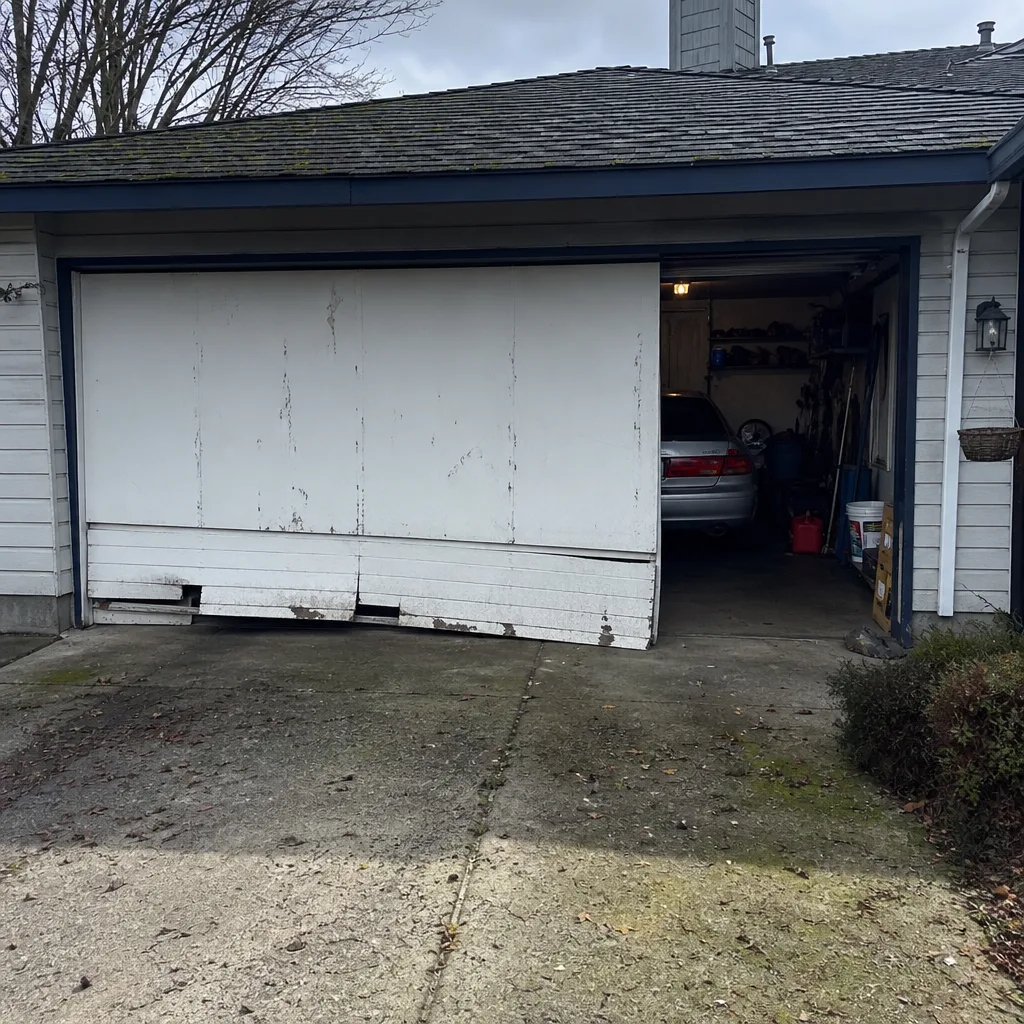
See the difference
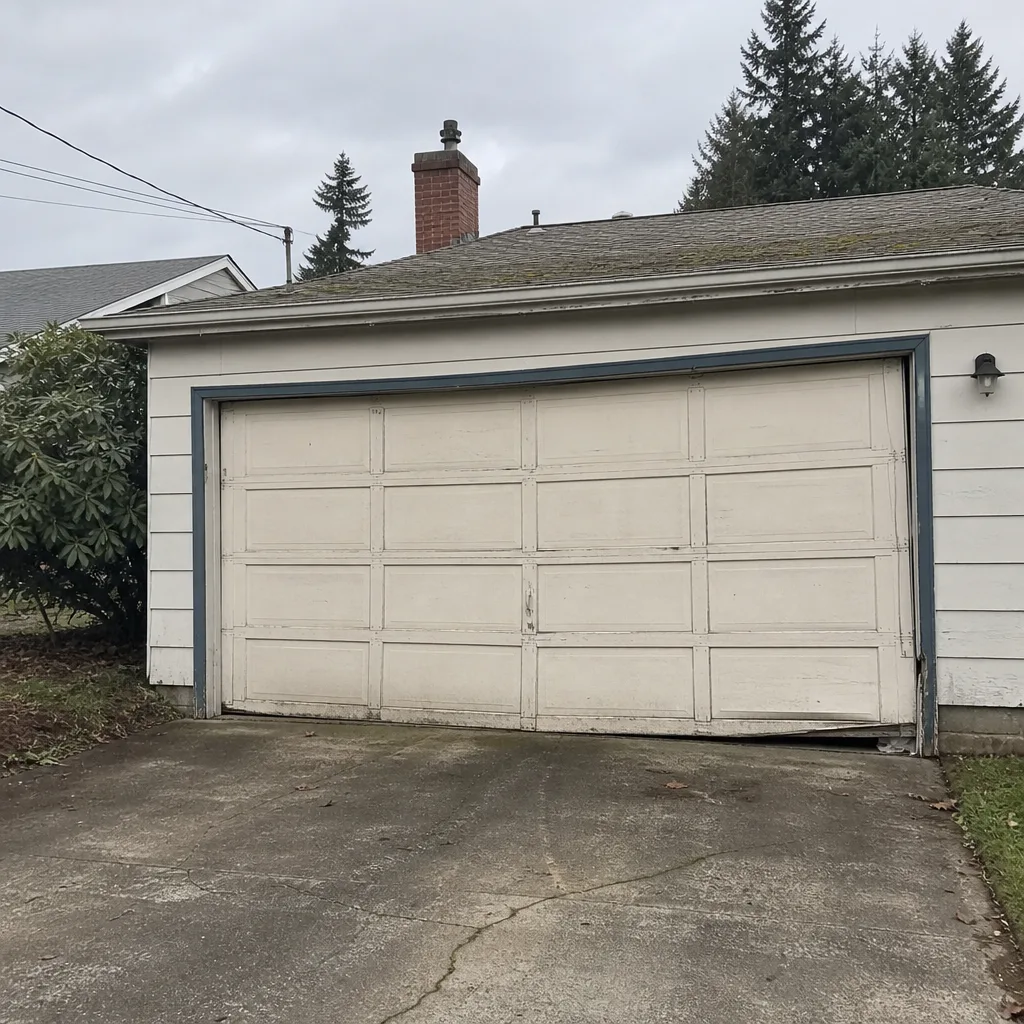 Before
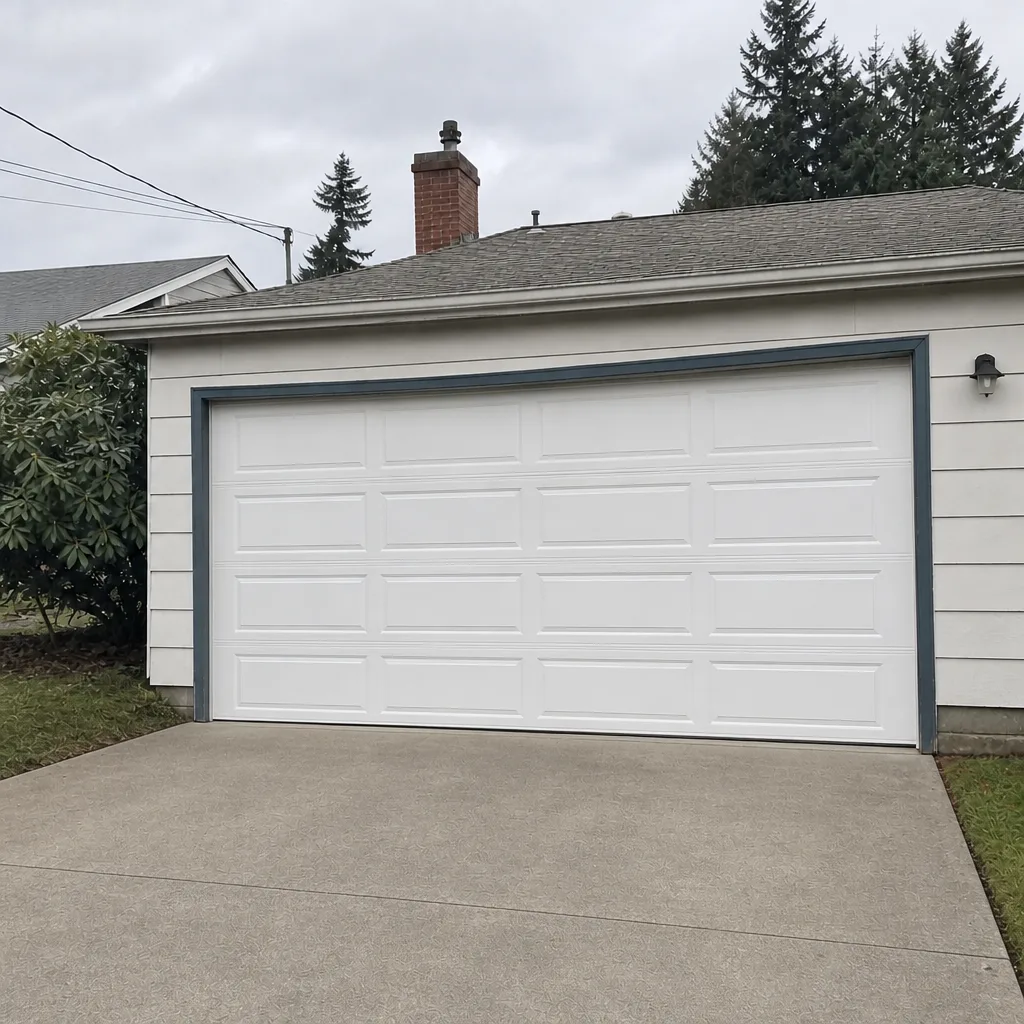 After
 Before
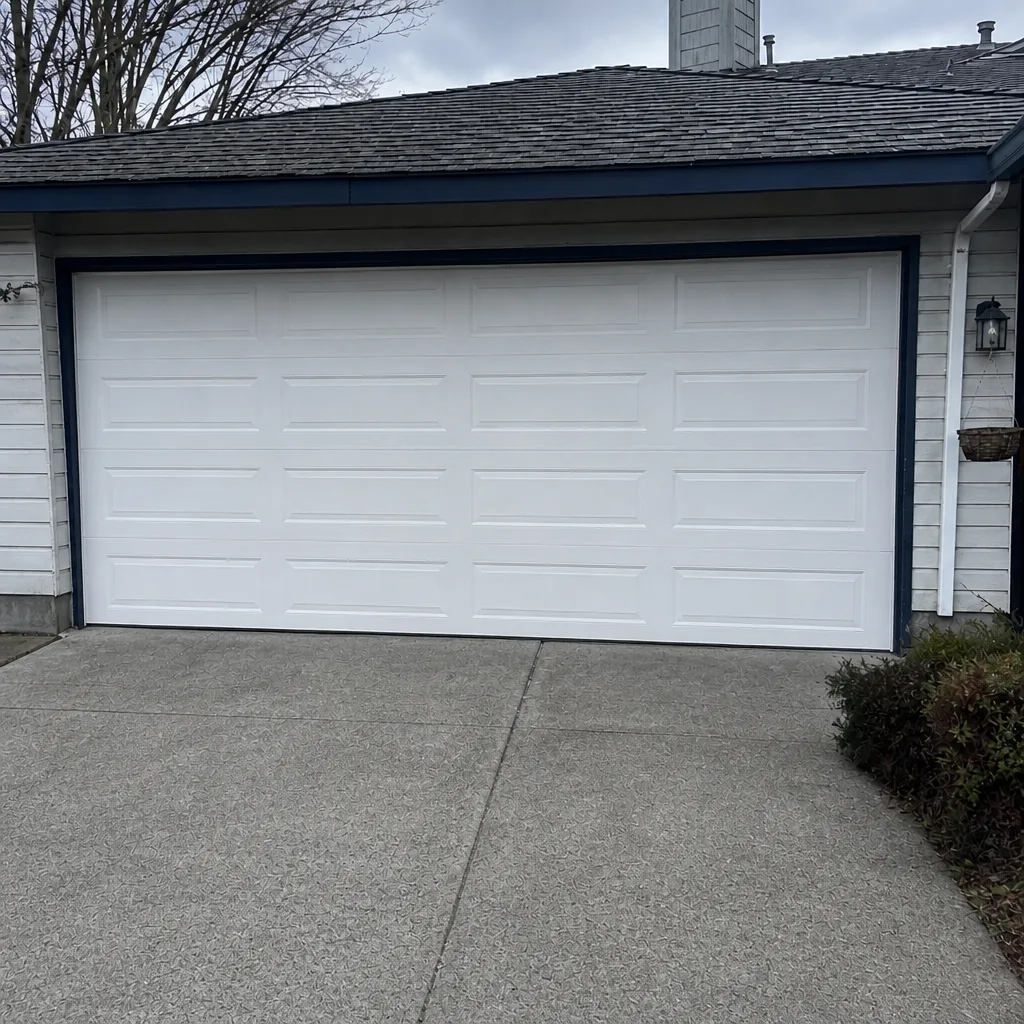 After
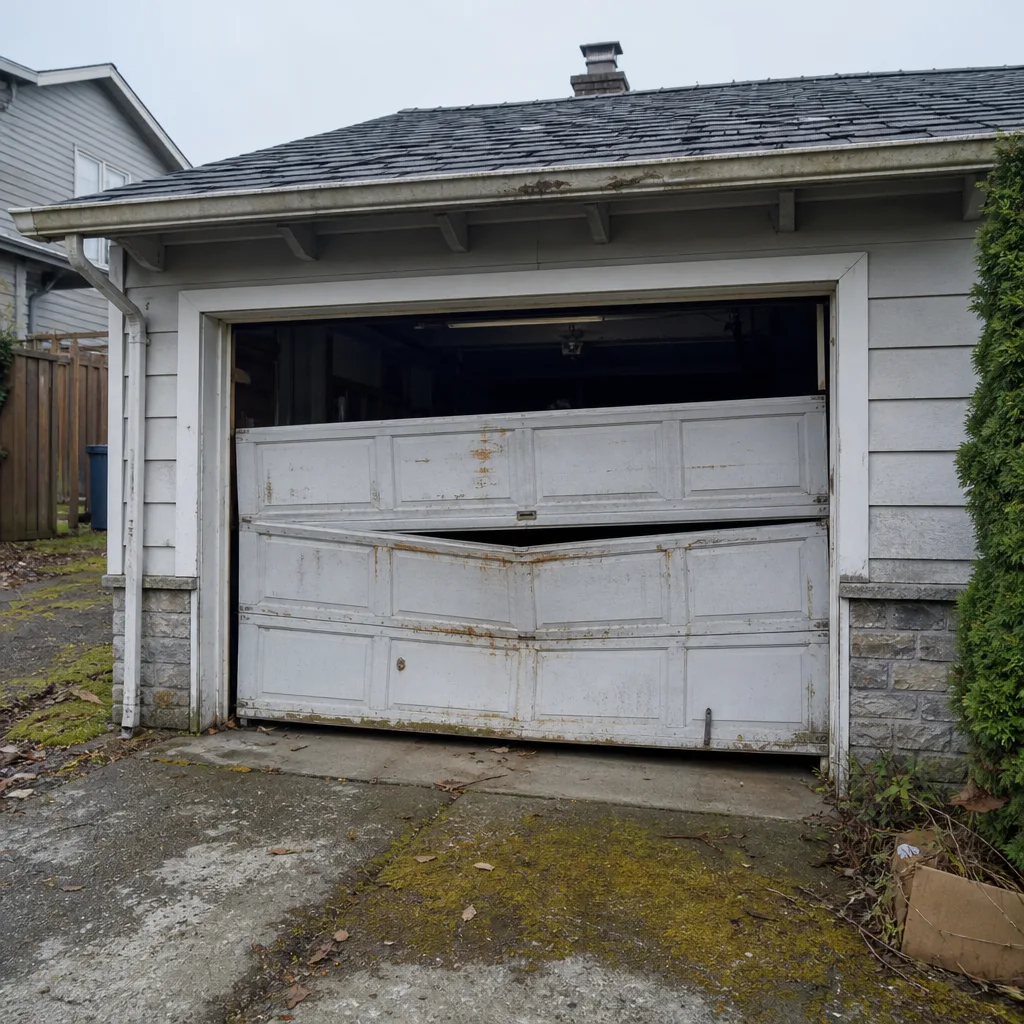 Before
 After
When to Call a Professional
Call a professional when a spring shows any sign of failure, when a cable is frayed, when the door is unbalanced or off-track, or when a warning sign has stopped being occasional. Those are the cases where a routine call stops a same-day emergency. On the repair side, we offer free estimates, upfront pricing, and a written estimate before any work starts, so the final price is the number you agreed to. We connect you with experienced local professionals – our technicians have up to 15 years of experience – who are licensed and insured as their state requires. Our specialist focus is garage doors only, which means every visit is handled by someone who works on doors every day. Call (844) 709-1359. We answer 24/7, and we offer free estimates.
Frequently Asked Questions
Hesitation before the door lifts is the earliest reliable sign, and it usually points to spring tension loss rather than an opener problem. If the door hesitates for even a second, get it checked before the next time you need it. Call (844) 709-1359 for an exact quote – estimates are free.
No. A snapped spring means the door is much heavier than the opener can safely carry, and running it risks damaging the opener or causing injury. Leave the door closed and call for professional service.
Disconnect the opener with the release cord and lift the door halfway by hand. A balanced door stays where you leave it; a slow door moves at the same pace but the door still holds when released. If the door drops or needs effort to hold, it’s unbalanced – not just slow. Call (844) 709-1359 to book a diagnostic visit.
Yes, humidity and damp air accelerate rust, and rust accelerates metal fatigue in torsion springs. If your spring shows a shiny or pitted patch, get it inspected. Call (844) 709-1359 – estimates are free.
Spring repair in Tacoma is quoted per spring based on the door’s weight and configuration, and matched pairs are usually replaced together. You’ll get a written estimate before any work starts, and the price you agree to is the price you pay. Call (844) 709-1359 for an exact quote – estimates are free.
No. The free estimate is the price, and no work starts until you agree to it. If a technician finds something the estimate didn’t account for, you’ll see a revised number before anyone touches the door.
The local professionals we connect you with are licensed and insured as their state requires, and our technicians have up to 15 years of experience working on garage doors. Call (844) 709-1359 to schedule.
We work on the major residential brands, including LiftMaster, Chamberlain, Genie, Clopay, Amarr, Wayne Dalton, Craftsman, and Raynor. Whatever you already have installed, we can diagnose and repair it. Call (844) 709-1359 to confirm your system.
Yes, same-day service is available for urgent situations, including stuck-open or stuck-shut doors. Call (844) 709-1359. We answer 24/7, with fast dispatch from 7am to 7pm, Sunday through Friday.
The Bottom Line
Most garage door failures are preceded by weeks of warning. A hesitation, a grinding noise, a rough patch on the spring, a door that no longer holds when you lift it by hand – each of those points to a specific component and a specific next step. Watch for the “watch it” signs, schedule the “schedule it” signs before they become urgent, and stop using the door entirely when you see the “stop” signs. If you’re in Tacoma, humidity and damp air make rust and spring fatigue part of the picture, so regular checks pay off twice as fast.
Every visit from Tacoma Garage Door Repair Pros starts with a free estimate, and the price you agree to is the price you pay. If you’re not sure which tier a warning sign falls into, call (844) 709-1359. We answer 24/7, and we offer free estimates. Fast dispatch from 7am to 7pm, Sunday through Friday, for the Tacoma area, and same-day service for urgent repair. For a wider view of what we do, see garage door repair, garage door opener repair, and garage door installation around Tacoma.
Every service visit is handled by the team at Tacoma Garage Door Repair Pros, specialists in garage doors only. If you’d like to speak with us directly, start from our Tacoma Garage Door Repair Pros homepage and give us a call.
Written by the team at Tacoma Garage Door Repair Pros.