
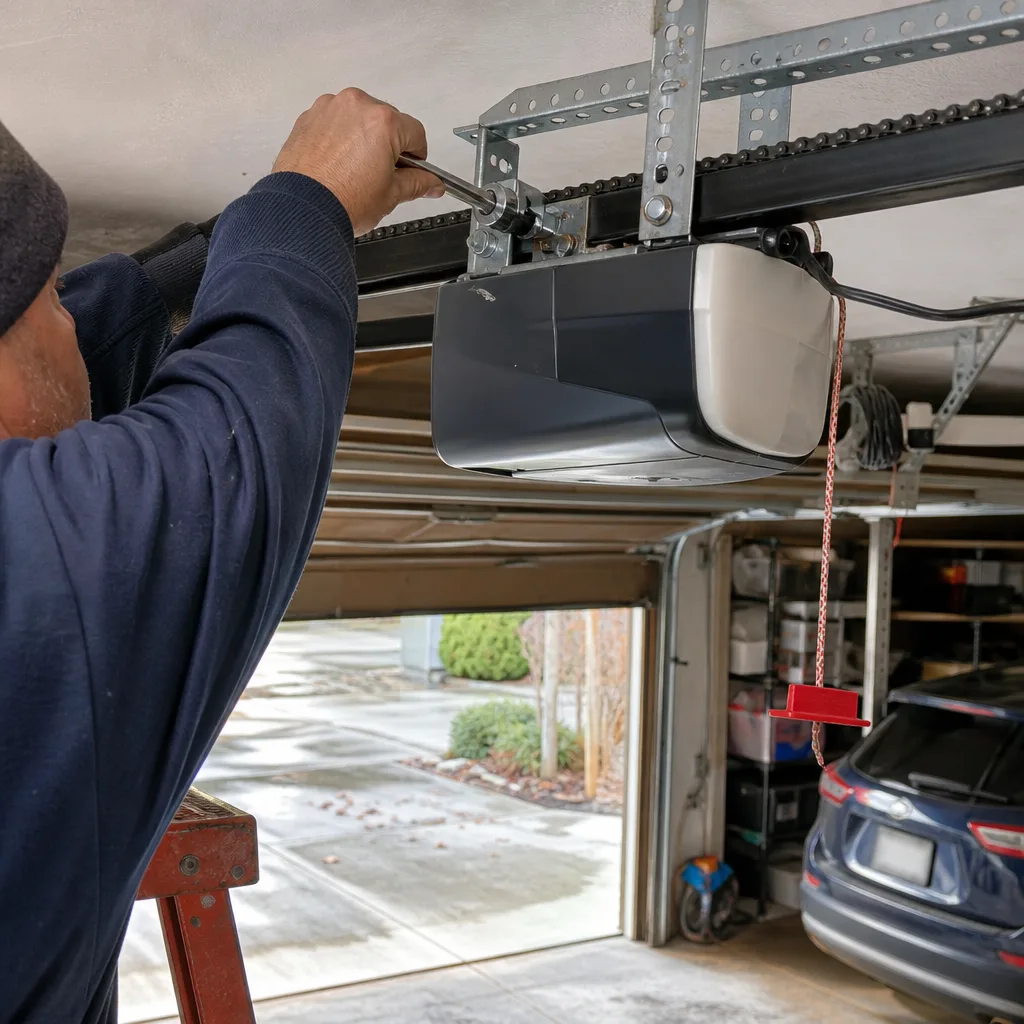
Last updated November 21, 2026
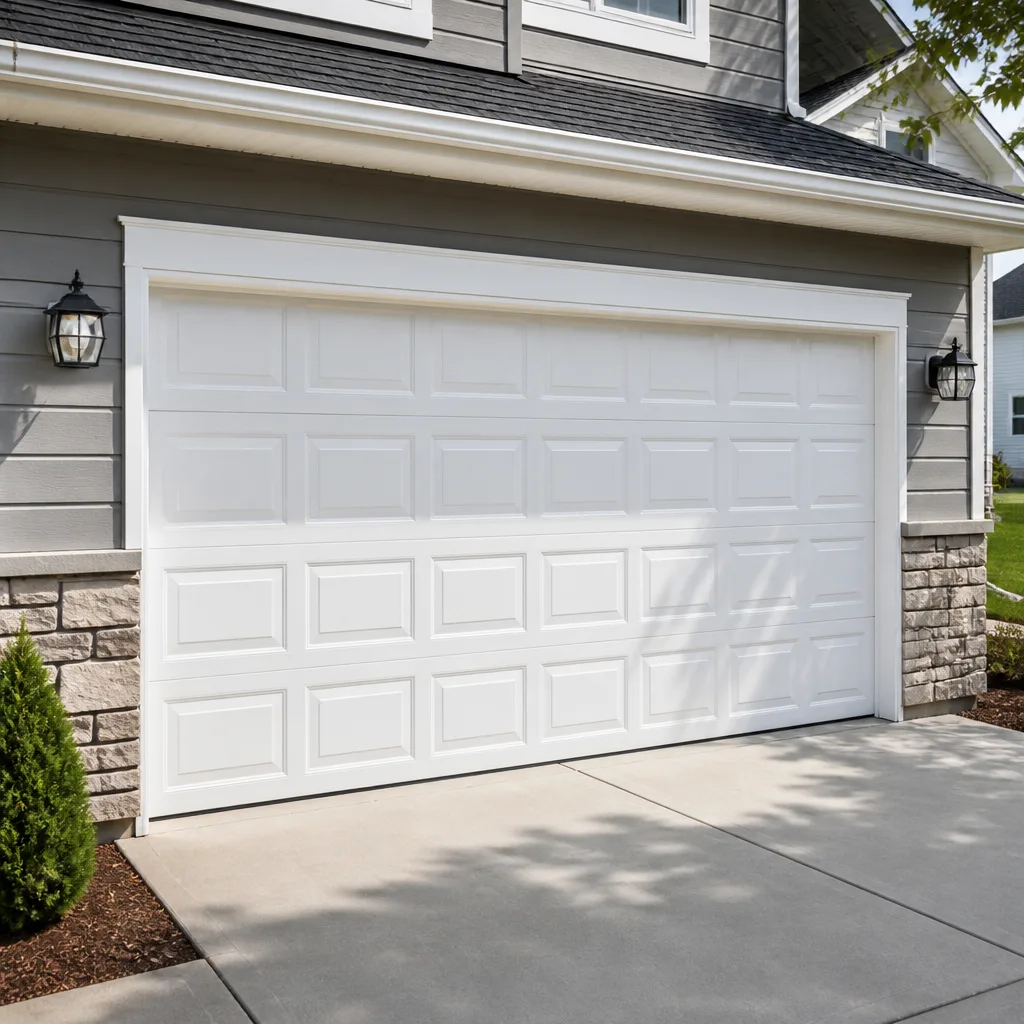 Raised-panel steel
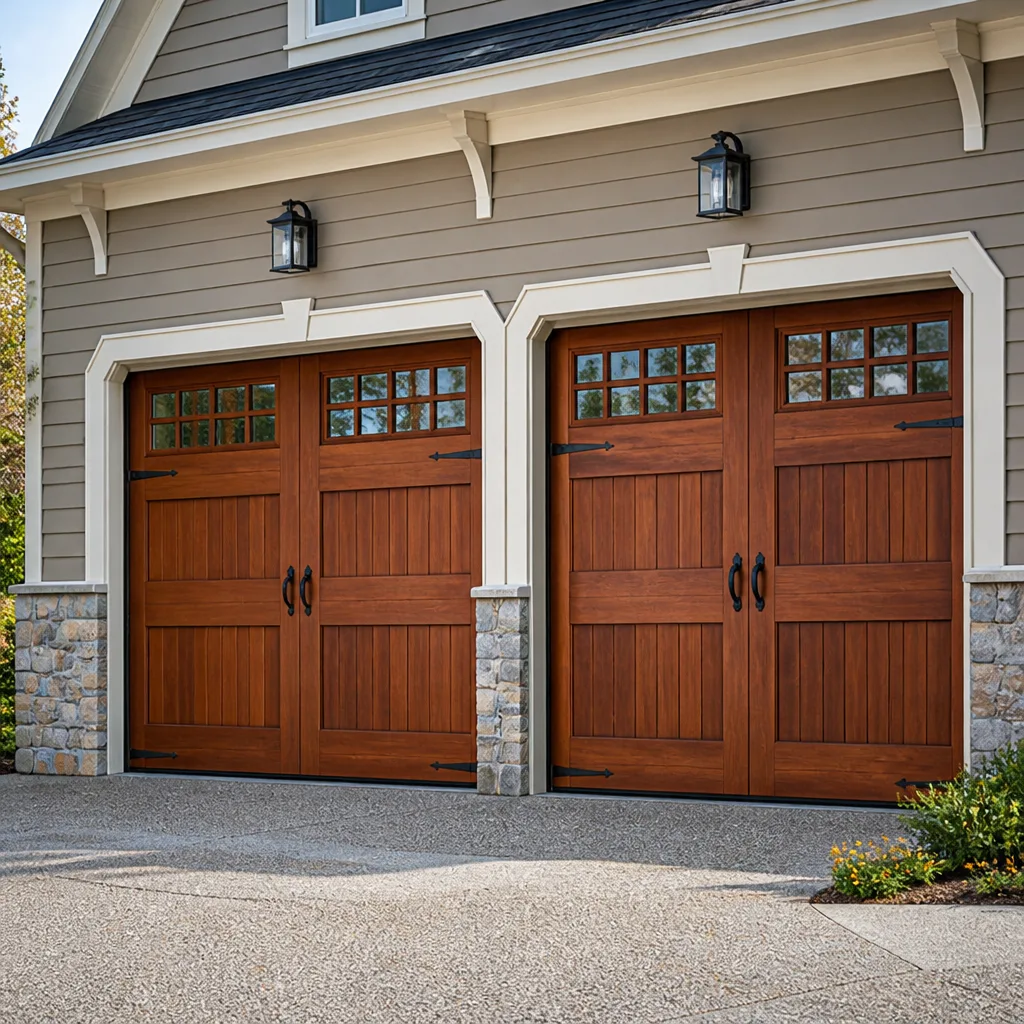 Carriage house
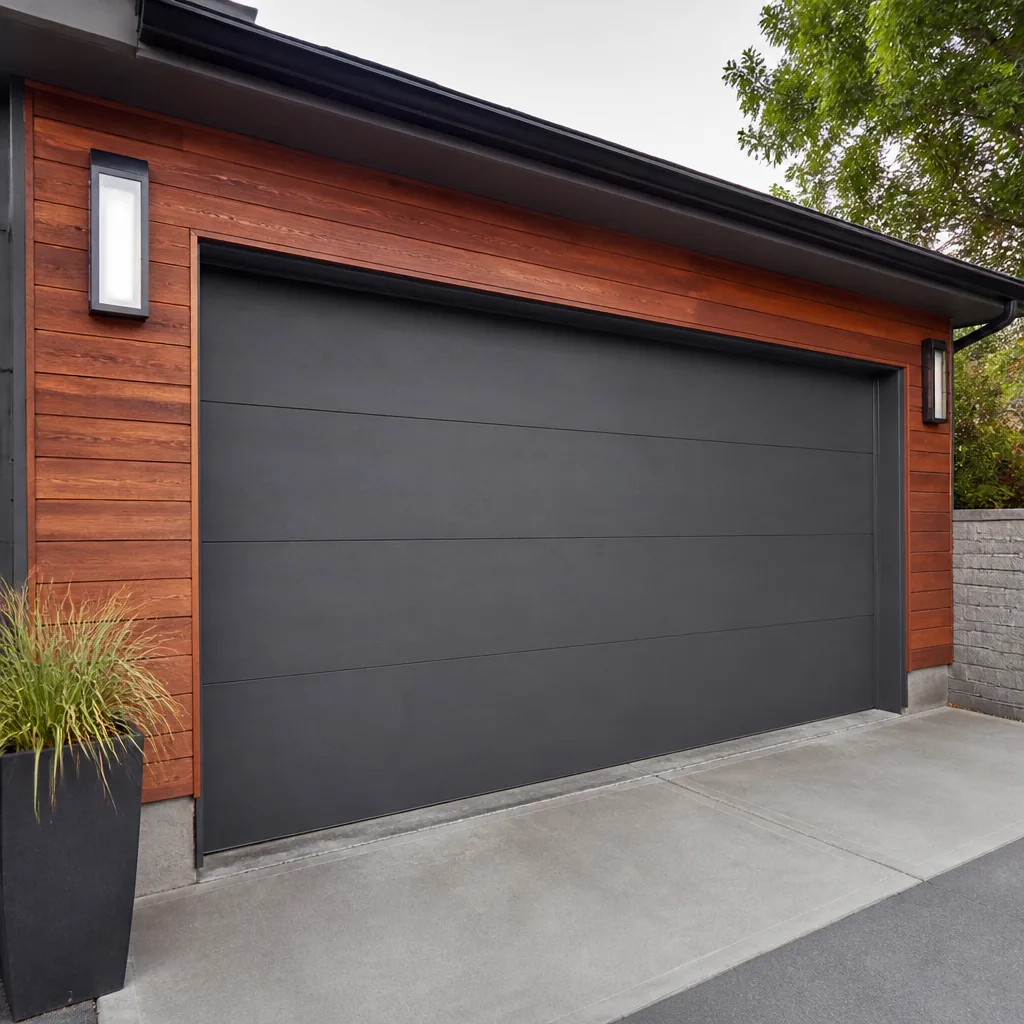 Modern flush
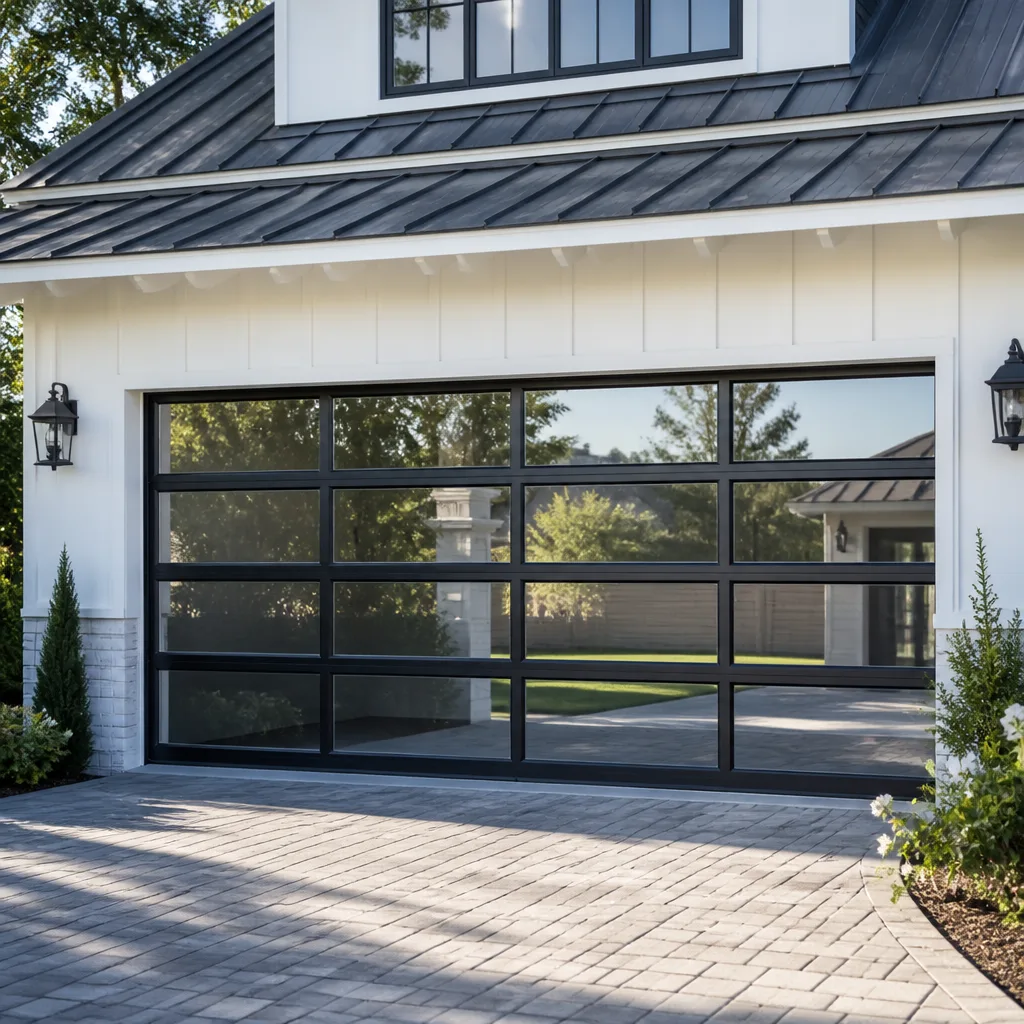 Full-view glass
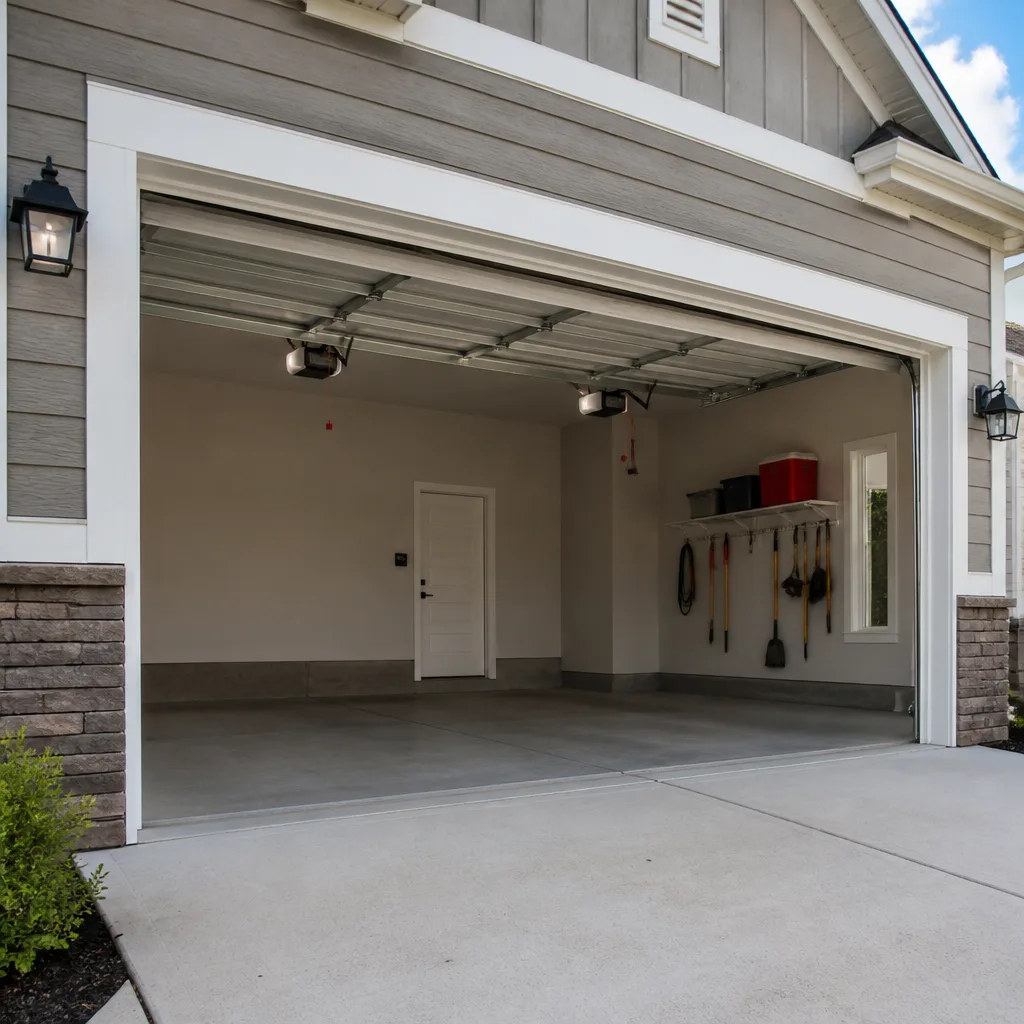 LiftMaster openers
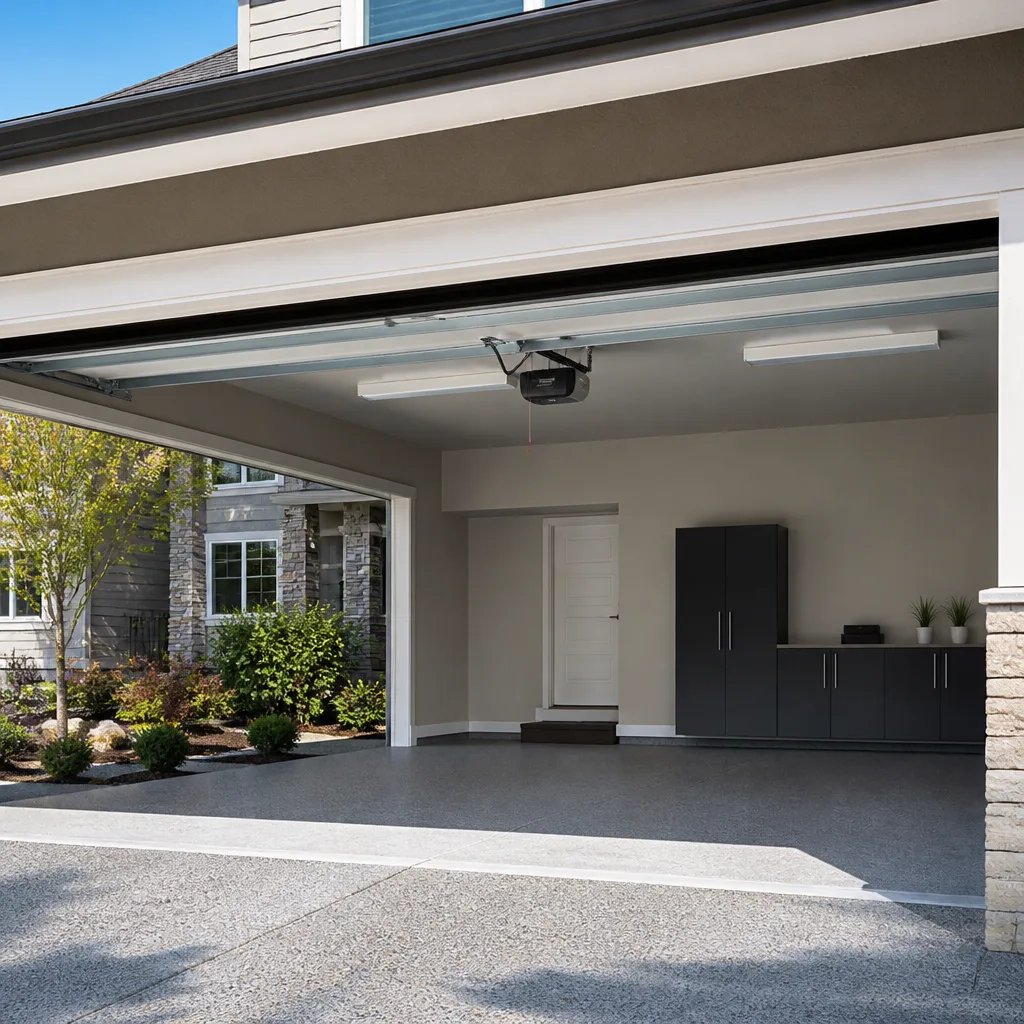 Chamberlain openers
Full 25-point door and opener safety check with every visit - springs, cables, rollers, tracks, and your LiftMaster or Chamberlain opener included
You get a price before we start. It does not change when the pro arrives.
Get your free estimateChoosing the Right Garage Door Brand: A Buyer’s Guide for Tacoma
Brand name doesn’t stop rust. Steel thickness and coating quality do. A door with a beautiful factory finish can look rough within a few Tacoma winters if the gauge is too thin and the paint system isn’t built for sustained humidity and rain. That gap between what a brochure promises and what a Pacific Northwest climate delivers is the single biggest factor most buyers miss. This guide covers how to evaluate steel gauge, what warranty terms actually exclude, which insulation levels earn their price here, how parts availability affects repair downtime, and how each material holds up to Tacoma’s specific weather and UV profile.
Quick Answer
The best garage door brand for Tacoma is the one whose steel gauge, coating system, and insulation match your specific exposure, not the one with the biggest ad budget. For most homes here, a 24-gauge steel door with a galvanized or multi-layer finish and an R-value between 9 and 12 delivers the longest lifespan per dollar. Brands like Amarr, Wayne Dalton, and Raynor consistently score well on those criteria, and the deciding factor is usually which one has local parts stock when something breaks.
Styles & brands we work with
- Raised-panel steel
- Carriage house
- Modern flush
- Full-view glass
- LiftMaster openers
- Chamberlain openers
Table of Contents
- Why Steel Gauge Matters More in Tacoma Than Anywhere Else
- How Tacoma’s Climate Tests a Garage Door
- Wood, Steel, Aluminum, and Fiberglass: The Tacoma Comparison
- R-Value in Context: What Actually Makes a Difference Here
- What the Warranty Covers and What Tacoma Weather Doesn’t
- Parts Availability: The Repair Downtime Reality Check
- How Brand Choice Connects to Your Opener and Lock System
- Brand Selection Checklist for Tacoma Buyers
Why Steel Gauge Matters More in Tacoma Than Anywhere Else
Steel gauge numbers run backwards: a 24-gauge door is thicker than a 25-gauge, and 25 is thicker than 27. Most builders install 27-gauge because it’s cheaper, and it looks identical on the showroom floor. In a dry climate that door may hold up fine for a decade. In Tacoma, where the door cycles through wet winters, damp springs, and summer temperature swings year after year, thin steel flexes more, develops dents more easily, and gives moisture more opportunity to work under the finish.
Here’s what each gauge means in practice:
- 27-gauge: Builder-grade. Flexible. Costs less upfront, but the finish is more likely to fail at joints and panel edges where water collects. Common on new construction and low-price replacements.
- 25-gauge: Middle of the road. A reasonable compromise for a protected installation where the door faces away from prevailing weather.
- 24-gauge: The practical floor for a long-life door in Tacoma. Stiffer, less prone to flex, and better able to hold a coating system through years of humidity cycling.
- Thicker than 24-gauge: Heavy and expensive. Worth considering only for very wide single openings or high-wind requirements.
The gauge isn’t stamped on the door. You have to ask. Any dealer should know. If they can’t tell you the gauge of a door they’re selling, that’s your answer about how much they care about the long-term performance of their product in Tacoma.
Coating matters as much as gauge. A 24-gauge door with a single thin coat of paint can fail faster than a 25-gauge with a properly cured, multi-layer system. Look for galvanized steel with a factory finish applied over a pretreatment layer, and pay attention to how the edges and panel seams are finished, because that’s where corrosion starts.
How Tacoma’s Climate Tests a Garage Door
Tacoma sits in a mild but wet climate: cool, grey winters, a long damp spring, a dry late summer, and UV exposure in the clear months. None of those factors is extreme on its own. Together, they create a cycle of wetting and drying that works on every joint, hinge, and fastener on the door.
What that means for the hardware, not just the panels:
- Hinges and rollers take the most punishment. Standard steel hinges will show surface rust within a couple of seasons. Nylon rollers and galvanized or coated hinges last considerably longer.
- Bottom seals and weatherstripping are the first things to fail. A seal that hardens and cracks lets water track along the floor and into the bottom edge of the panel, which is the last place you want moisture sitting.
- Track and fasteners accumulate moisture in the low spots. Galvanized track and coated fasteners cost a little more and pay back in the years between repairs.
- Spring and cable assemblies sit in the same damp air. Regular inspection matters here, and it’s a job for a technician because springs are under extreme tension.
- UV exposure in the dry months fades lower-grade finishes and hardens rubber faster than the wet season does. A door that gets direct afternoon sun will age differently from one under a tree canopy.
In our experience across Tacoma neighborhoods like Proctor, North End, and the South Tacoma area, the doors that last are the ones with a decent gauge, coated hardware, and an intact bottom seal. The brand on the panel matters far less than those three things.
Your garage door is your largest moving entry point. It’s also the biggest painted surface on most homes, which means finish failure is visible in a way that a failing fence or gutter isn’t. When you’re comparing brands, compare finishes the same way you’d compare a car’s paint: not by color, but by how many layers and what prep sits underneath.
As a starting point for your research, our Tacoma Garage Door Repair Pros team works on every major brand and can tell you what a given door’s hardware actually needs in this climate.
Wood, Steel, Aluminum, and Fiberglass: The Tacoma Comparison
Material choice drives how a door ages in Tacoma more than brand does. Each has a clear set of trade-offs here, and the “best” one depends on your opening, your budget, and how much maintenance you’re willing to do.
Steel
Steel is the default for good reason. It’s strong, it holds a factory finish well when the gauge and coating are right, and it’s repairable. The catch in Tacoma is moisture at the edges and hardware. Buy coated hardware, keep the bottom seal intact, and touch up any chips promptly. A 24-gauge steel door with a galvanized base is the most durable per dollar for most homes here.
Wood
Wood looks great and suits the craftsman and bungalow styles common around Tacoma’s older neighborhoods. It also requires the most attention in this climate. Paint or stain has to be maintained on a schedule, end grain needs sealing, and any moisture that gets behind the finish starts a problem you can’t see until it’s structural. If you love the look and don’t mind the upkeep, wood is a fine choice. If you want low maintenance, it isn’t.
Aluminum
Aluminum doesn’t rust, which sounds ideal for a wet climate. The problem is that it corrodes differently, and it dents easily. Thin aluminum panels can look tired quickly in a household with bikes, kids, or a tight driveway. Full-view aluminum doors with glass panels are popular for modern homes, and higher-grade frames with a proper anodized or powder-coated finish hold up reasonably well. Cheap aluminum is a false economy.
Fiberglass
Fiberglass resists moisture and won’t rust at all. It’s light, which is easy on the opener, and it can be molded to look like wood grain. The trade-offs are UV stability (lower grades chalk and fade) and impact resistance (it can crack rather than dent). For a protected opening and a homeowner who wants a wood look without the maintenance, fiberglass is worth a look. Ask specifically about the UV rating of the finish, because that’s where cheap fiberglass fails in Tacoma’s summer sun.
Quick comparison
- Best all-around for Tacoma: Galvanized 24-gauge steel with a multi-layer factory finish.
- Best for period homes with upkeep budget: Wood, properly sealed and maintained.
- Best for modern full-view designs: High-grade aluminum with powder-coated frames.
- Best wood-look with low maintenance: Fiberglass with a UV-rated finish.
When your door reaches the end of its life, garage door installation is measured and scheduled rather than rushed, so you get a free measure and a written price before anything is ordered. That’s also the right time to get the material and gauge decision right, because it’s the one you’ll live with for years.
R-Value in Context: What Actually Makes a Difference Here
R-value measures how well a door resists heat flow. National marketing pushes very high R-values, and for a garage in a Minnesota winter that makes sense. Tacoma’s climate is different. Our winters are mild, the temperature swing between inside and outside is smaller, and the garage often isn’t a conditioned space. That changes what insulation actually buys you.
Here’s a practical read on R-value ranges for Tacoma homes:
- Uninsulated (single-layer steel): Noisy, prone to condensation on the inside face in damp weather, and the least comfortable. Fine for a detached storage garage.
- R-6 to R-9: A meaningful step up. Quieter operation, reduced condensation, and better temperature stability if the garage shares a wall with the house. Good baseline for most Tacoma homes.
- R-9 to R-12: The sweet spot for an attached garage or one used as a workshop. Noticeably quieter and more stable in damp weather.
- R-16 and above: Worth it only if the garage is heated or conditioned, or if you’re converting part of it to living space. Above this, the incremental comfort gain in Tacoma’s climate is small.
The other thing insulation does in a Tacoma garage is control condensation. A cold, uninsulated steel panel on a damp morning will sweat on the inside face. That moisture sits against stored items, tools, and anything with a metal surface. An insulated door with a thermal break between the inner and outer skins stays closer to ambient temperature and dramatically reduces that problem. If your garage stores anything you care about, insulation is about moisture control as much as temperature.
Noise is the third benefit. An insulated door with a proper bottom seal and nylon rollers is much quieter in a house with bedrooms over the garage, which matters in a lot of Tacoma homes where the garage sits under or beside living space.
What marketing overclaims for our region: doors pushing R-18 or higher as a must-have for every home. In a heating-dominated climate with a conditioned garage, yes. In a mild Tacoma climate with an unconditioned garage, you’re paying for a number that won’t change your comfort or your energy use in any measurable way. Buy the right insulation for the job, not the biggest number.
What the Warranty Covers and What Tacoma Weather Doesn’t
Warranties are written by lawyers and marketed by salespeople. Read the exclusions, because that’s where Pacific Northwest homeowners get surprised. A warranty that covers panel defects but excludes finish failure, corrosion at cut edges, and damage from “environmental conditions” is a warranty that won’t help the most common problem in this climate.
Here’s what to compare across brands:
- Panel and structural coverage. Look for a limited lifetime warranty on the door sections themselves. Amarr and Raynor both offer strong structural coverage on their premium lines. Confirm what voids it: usually improper installation or unauthorized modification.
- Finish and paint coverage. This is where brand differences matter in Tacoma. Some warranties exclude “corrosion caused by environmental conditions,” which a coastal-adjacent climate arguably falls under. Ask directly what the finish warranty covers and whether rust at the bottom edge is included. Get it in writing.
- Hardware coverage. Hinges, rollers, and springs are usually covered on a shorter schedule than panels. Springs especially. Ask what the hardware term is and whether it’s parts-only or includes labor.
- Labor. Most manufacturer warranties are parts-only. That means when a covered part fails, you may still pay for the technician. Ask about this before you buy.
- Pro-rated terms. Some warranties reduce coverage over time. A “lifetime” finish warranty that drops to 50 percent after a few years isn’t the same as one that stays full. Read the schedule.
The real-world corrosion performance question is harder. A warranty doesn’t stop rust; the gauge and coating do. In our experience in Tacoma, the doors that survive the longest are the ones with coated hardware, intact bottom seals, and prompt touch-up of any chips. No warranty replaces those habits.
Wayne Dalton and Craftsman both offer warranty schedules that cover the structural side well. What they don’t fully cover is the finish wear that comes from years of wetting and drying. That’s an owner-maintenance issue, not a manufacturing defect, and no brand will pay for it.
If a spring fails, that’s a repair, not a warranty claim, and it’s one of the more dangerous jobs on a garage door. That’s exactly what our garage door repair service is built for.
Parts Availability: The Repair Downtime Reality Check
Here’s the question almost no buyer asks and every buyer should: when something breaks in three years, how long will the door be out of service while a part ships? A cheap brand that requires a two-week wait for a proprietary roller, hinge, or opener part is expensive in the only currency that matters during a failure: time.
What local availability looks like in Pierce County:
- LiftMaster and Chamberlain: The most widely stocked opener brands. Parts and accessories are easy to source, which keeps opener repair fast.
- Genie: Well-represented in the market. Common parts are generally available through local distributors.
- Clopay and Amarr: Two of the most common door manufacturers in the region. Panel and hardware parts are usually obtainable, though specific colors and models may take longer.
- Wayne Dalton: Broadly stocked. Their hardware designs are common enough that most technicians carry compatible parts or can source them quickly.
- Craftsman: Openers are ubiquitous; door parts depend on the model. Legacy models can take longer for specialty parts.
- Raynor: A solid brand with good regional distribution, though some specialty parts may need ordering.
The practical takeaway: brands with a local dealer network get you back in service faster. Before you buy, ask the dealer where the nearest parts source is and how long a typical specialty part takes to arrive. If the answer is vague, that’s a sign the door will sit open (or closed) waiting for a shipment.
This is one place where who installs the door matters as much as the brand. A technician who works on all these brands can usually find a compatible part or tell you immediately whether the job needs an order. Our technicians have up to 15 years of experience across Amarr, Wayne Dalton, Craftsman, Raynor, and the other major brands, so when something fails, the diagnosis and the parts conversation happen in the same visit.
If you’re staring at a door that won’t close and need help now, our garage door opener repair covers the electrical and mechanical side of the opener itself, not just the door.
How Brand Choice Connects to Your Opener and Lock System
The door and the opener are a system. A heavy insulated door paired with an underpowered opener will strain, hesitate, and wear out faster. A lightweight door on an oversized opener is wasted capacity. When you’re choosing a door brand, think about what’s going to drive it.
Compatibility questions to settle before purchase:
- Opener lift capacity: Match the opener’s rated capacity to the door’s weight plus the added weight of insulation and hardware. Dealers should give you an accurate door weight.
- Safety reverse: All modern openers sold in the US include a safety reverse system. Confirm the installation includes proper alignment of the photoelectric sensors and a functioning force test, because misaligned sensors are one of the most common service calls we get.
- Lock and handle hardware: Some brands use proprietary lock bars and handles. If you want to add a smart lock or an exterior keypad later, confirm what’s compatible now rather than after the fact.
- Smart-home integration: If remote monitoring matters to you, check whether the door brand’s recommended opener supports the app or platform you want. It’s a small detail that saves frustration later.
This is also where brand-agnostic service pays off. If your door is one brand and your opener is another (common), a technician who knows both systems can solve the problem without pushing you toward a matching proprietary setup. We work on your brand, and if that brand is Clopay on the door and LiftMaster on the opener, that’s fine.
Brand Selection Checklist for Tacoma Buyers
Here’s a step-by-step process to compare garage door brands for a Tacoma home, in the order that matters.
- Confirm the steel gauge. Ask for it in writing. Insist on 24-gauge or thicker for a long-life steel door in this climate. If the dealer can’t tell you, walk.
- Inspect the coating system. Ask how many layers and what pretreatment sits underneath. Look for coated hardware, galvanized track, and a properly finished bottom edge.
- Match insulation to the garage, not the brochure. R-9 to R-12 for most Tacoma homes. Higher only if the garage is conditioned or used as living space.
- Read the warranty exclusions. Look specifically at finish and corrosion language. Ask what “environmental conditions” means in the fine print.
- Check local parts availability. Ask the dealer where the nearest parts source is and how long specialty parts take.
- Confirm opener compatibility. Match capacity to door weight, confirm safety reverse is included, and check lock and smart-home compatibility.
- Get a written quote before anything is ordered. The price is quoted and agreed before any work starts.
Run this checklist against Amarr, Wayne Dalton, Raynor, and Craftsman, and you’ll have a clear picture of which one fits your home. The brand that wins on gauge, coating, insulation fit, warranty exclusions, and local parts stock is the right one for you, regardless of which name is louder in advertising.
Common Mistakes to Avoid
- Choosing by brand name alone. A famous brand still fails early if the specific door is a 27-gauge builder model with a thin finish. Judge the model, not the logo.
- Assuming higher R-value is always better. In Tacoma’s mild climate and an unconditioned garage, R-18 is marketing, not comfort. Match insulation to the space.
- Ignoring the bottom seal. Moisture collects along the floor line and the bottom edge of the panel is where most early rust starts. Inspect the seal and replace it when it hardens or cracks.
- Buying a cheap aluminum door for a busy driveway. Aluminum doesn’t rust but it dents easily and corrosion at raw edges is a real issue. Higher-grade frames with a proper finish are worth the premium.
- Skipping the warranty fine print. A warranty that excludes finish failure in “environmental conditions” won’t help when rust appears. Read the exclusions before you sign.
- Mismatching the opener to the door. An underpowered opener on a heavy insulated door wears out fast. Confirm capacity before installation.
- Assuming a new door means no maintenance. Every material needs some attention in this climate. Plan for seal inspection, hardware checks, and touch-up painting as part of ownership.
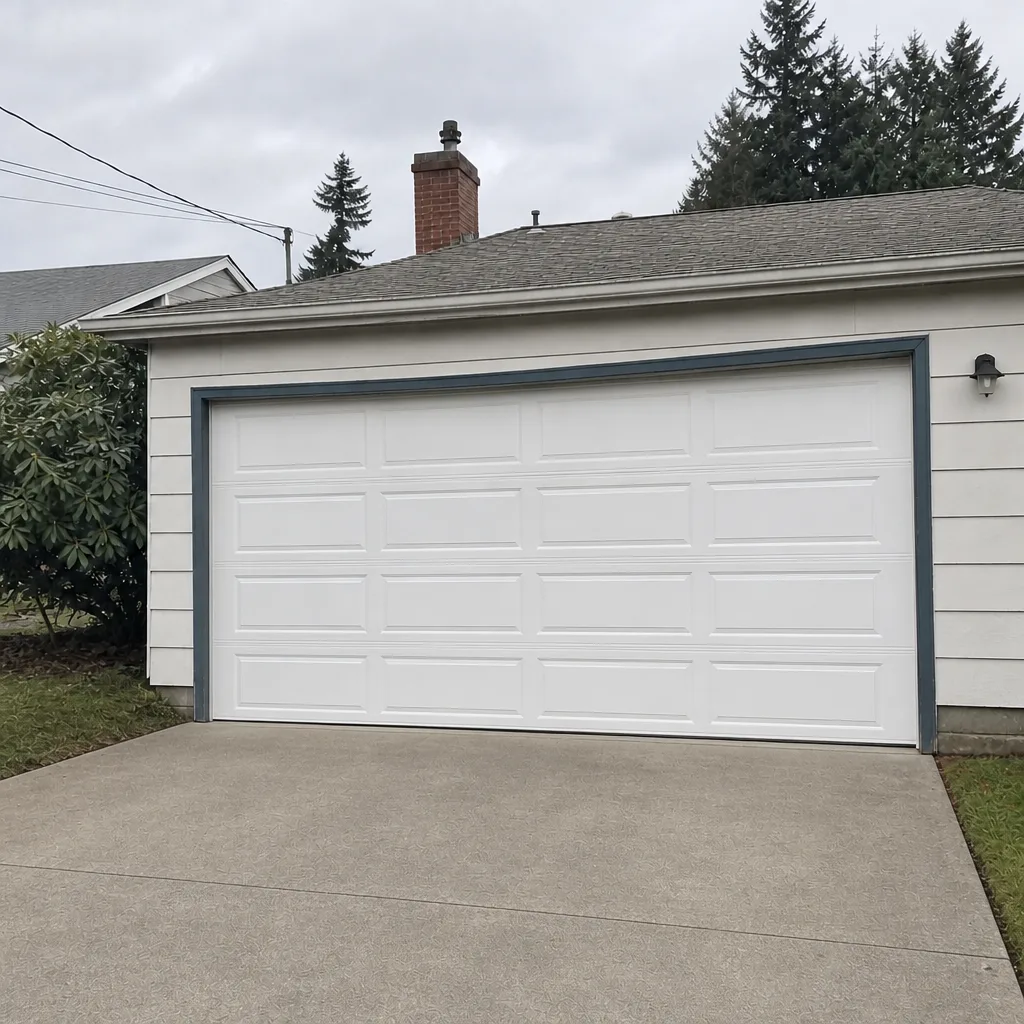
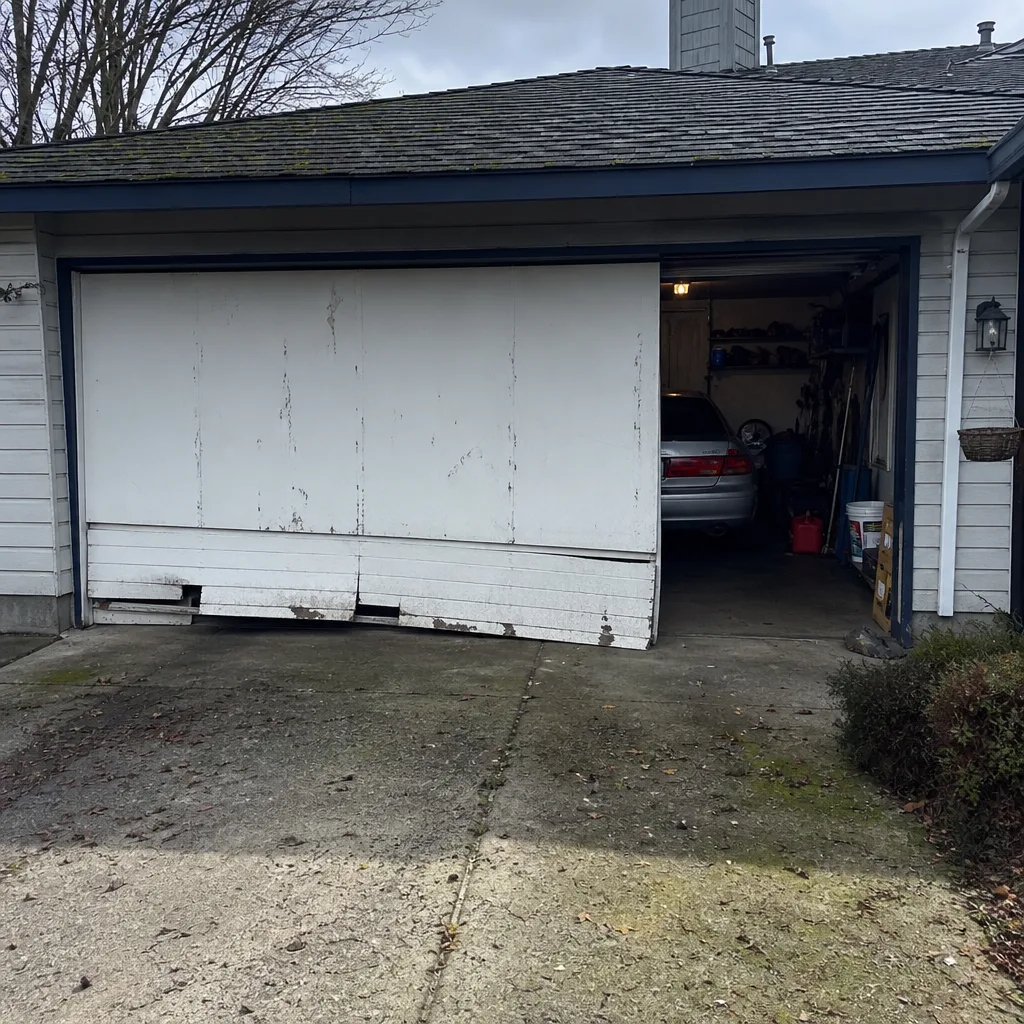
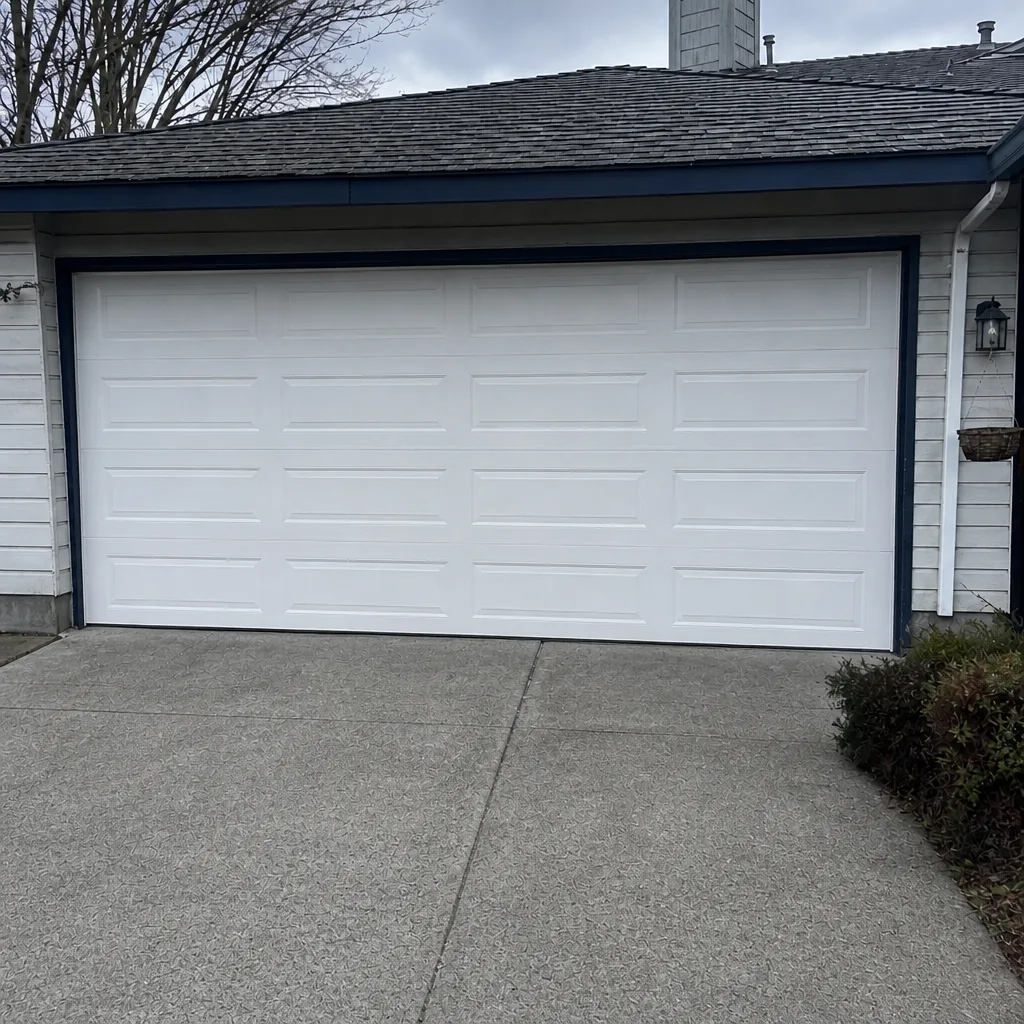
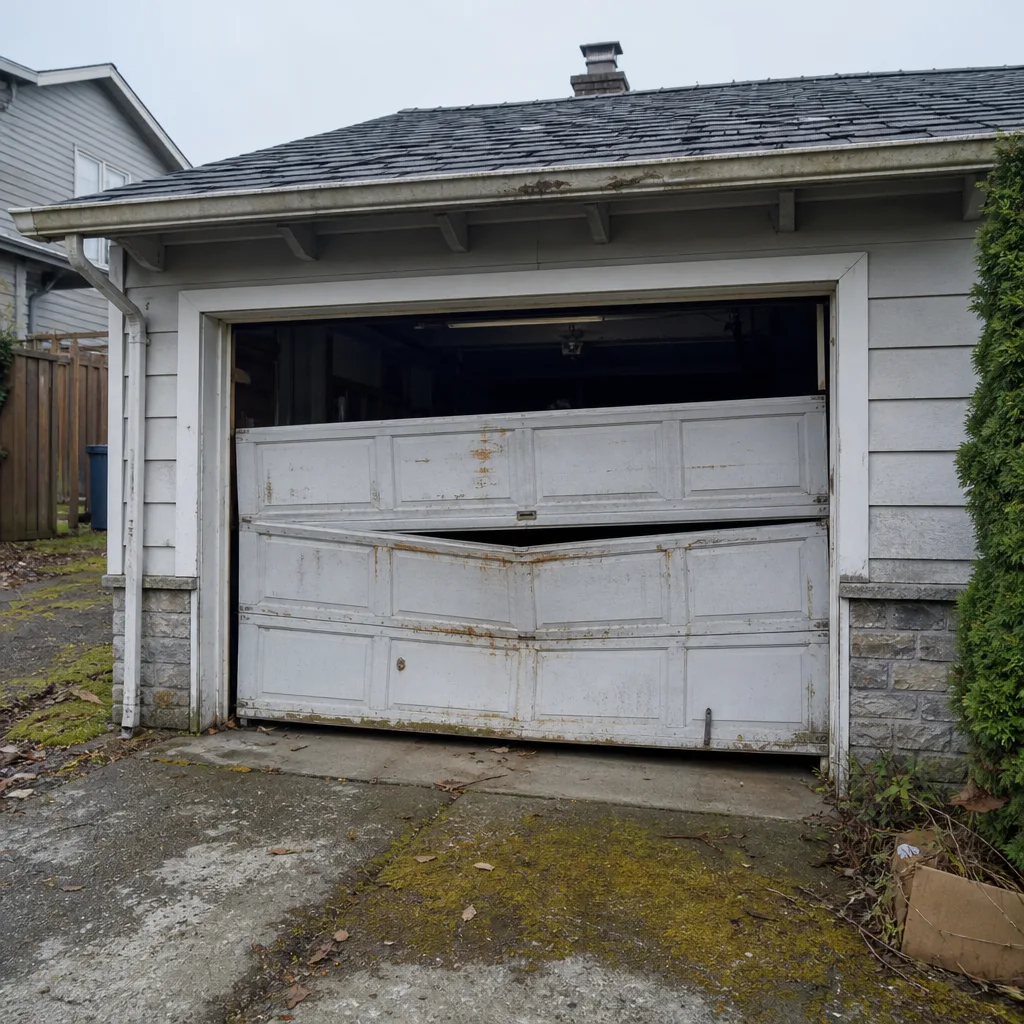
See the difference
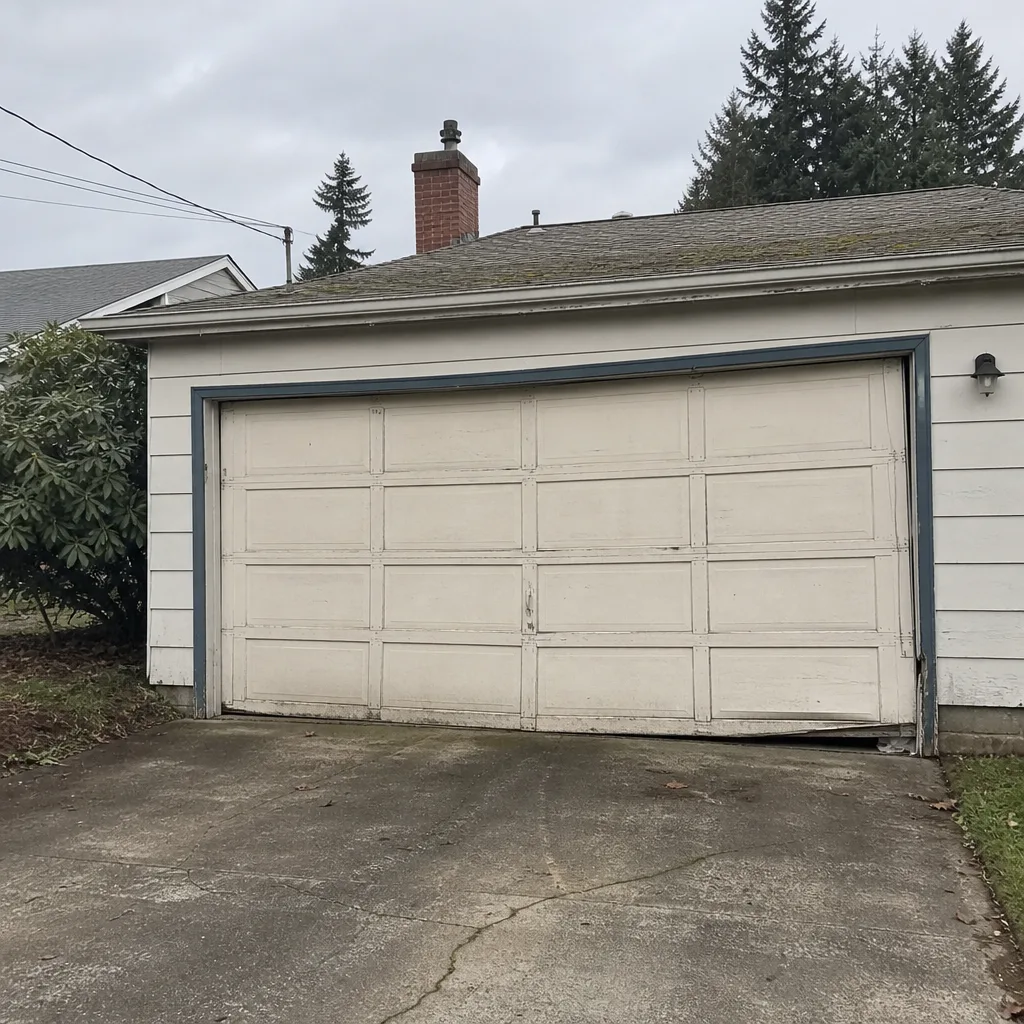 Before
 After
 Before
 After
 Before
 After
When to Call a Professional
A garage door has several jobs you can inspect and several you should never attempt yourself. Springs and cables are under extreme tension and can cause serious injury, so leave that work to a trained technician. If your door is crooked on the track, won’t close fully, or reverses unexpectedly, the opener or alignment needs diagnosis. If a panel is dented or the bottom edge is rusting through, call for an assessment before the damage spreads. If the door won’t move at all, that’s an emergency. When your door won’t move, we’re the call that gets it moving. Tacoma Garage Door Repair Pros offers free estimates in Tacoma. Call (844) 709-1359. We answer 24/7, with fast dispatch from 7am to 7pm, Sunday through Friday.
Frequently Asked Questions
There’s no single best brand, but the criteria that matter most in Tacoma are 24-gauge or thicker steel, a multi-layer factory coating, coated hardware, and an R-value between 9 and 12 for most homes. Amarr, Wayne Dalton, and Raynor all make doors that meet those standards on their premium lines. The brand is less important than those four specifications, and a written quote lets you compare them fairly.
The price depends on the size, material, insulation level, and hardware, and it’s set per job by the written estimate. We don’t quote ranges from a distance, because the honest answer comes from a free measure and a written price before anything is ordered. Call (844) 709-1359 for a free estimate.
Yes. A 24-gauge door resists flex and finish failure far better than a 27-gauge builder-grade door in a cycle of wet winters and dry summers. Thin steel dents more easily and gives moisture more chances to work under the finish at joints and edges. Ask for the gauge in writing before you buy.
We service LiftMaster, Chamberlain, Genie, Clopay, Amarr, Wayne Dalton, Craftsman, and Raynor. We work on your brand and don’t push you toward a proprietary system. If your door is one of these, we can diagnose and repair it.
Usually not above R-12 unless the garage is heated or converted to living space. Tacoma’s mild climate and shorter temperature swings mean the extra cost of a very high R-value door delivers little comfort gain. What insulation does help with here is condensation control and noise, and R-9 to R-12 handles both well.
That’s an emergency service call. A door stuck open exposes your home, and a door that won’t close is a security issue. We answer 24/7. A call outside dispatch hours is booked into the next opening, Sunday through Friday, 7am to 7pm.
The Bottom Line
Choose a garage door brand by the specifications that survive a Pacific Northwest climate: steel gauge, coating system, insulation matched to the garage, warranty exclusions, and local parts availability. Brand name is a starting point, not a decision. Amarr, Wayne Dalton, Raynor, and Craftsman all make doors worth comparing, and the model within a brand matters more than the name on the brochure. Ask for the gauge in writing, read the warranty exclusions, and get a written estimate before anything is ordered. That process is how you get a door that still looks right and works right long after the factory finish has proven itself in Tacoma weather.
If you’re ready to compare options or need a repair on the door you have, call (844) 709-1359 for a free estimate. We work on every major brand, we specialize only in garage doors, and the price is quoted and agreed before any work starts.
Written by the team at Tacoma Garage Door Repair Pros.