
Last updated November 21, 2026
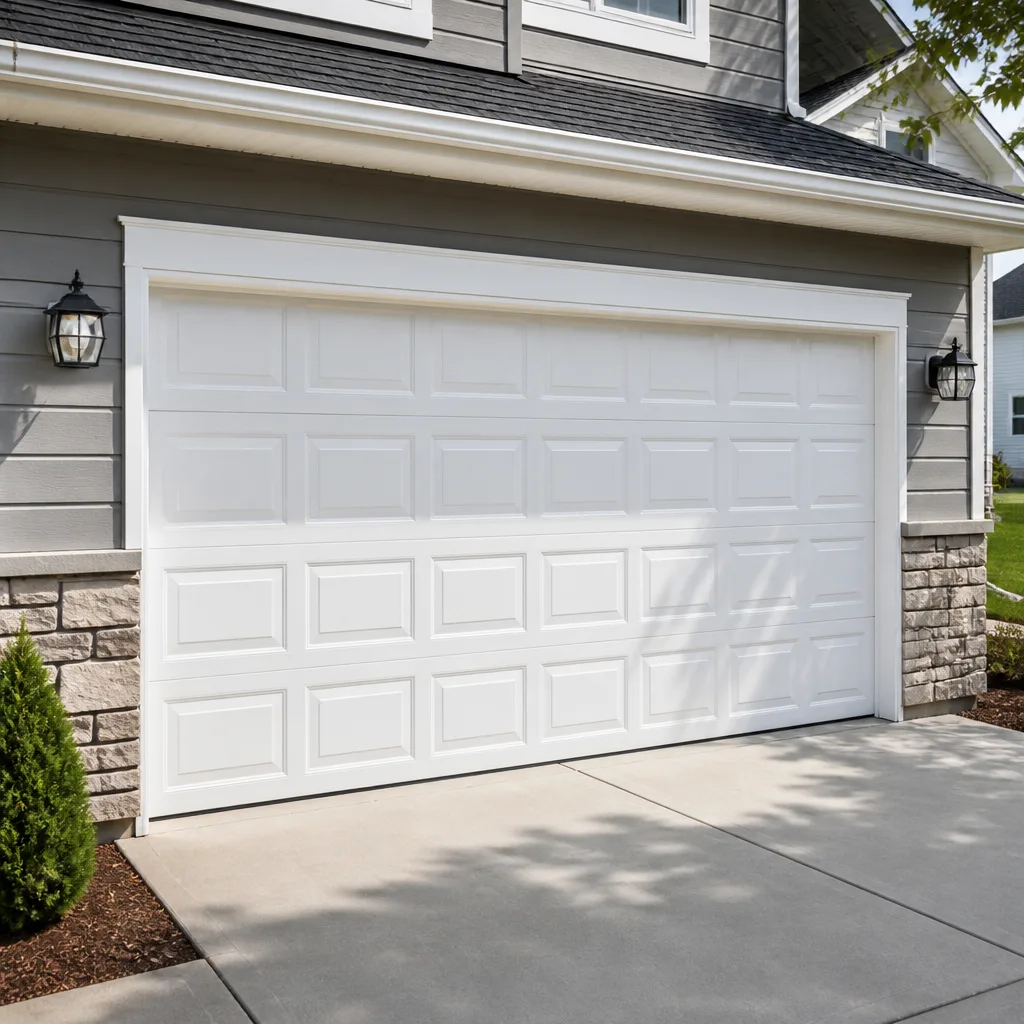 Raised-panel steel
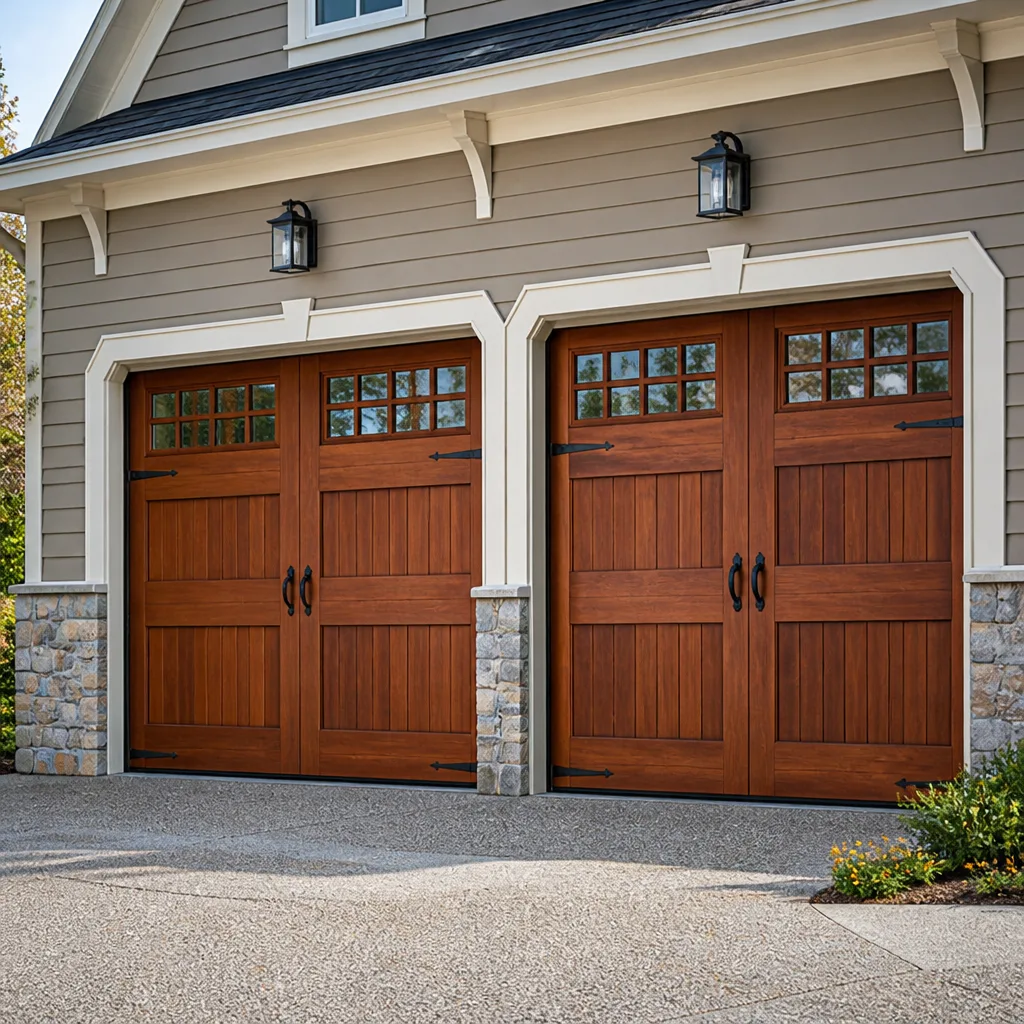 Carriage house
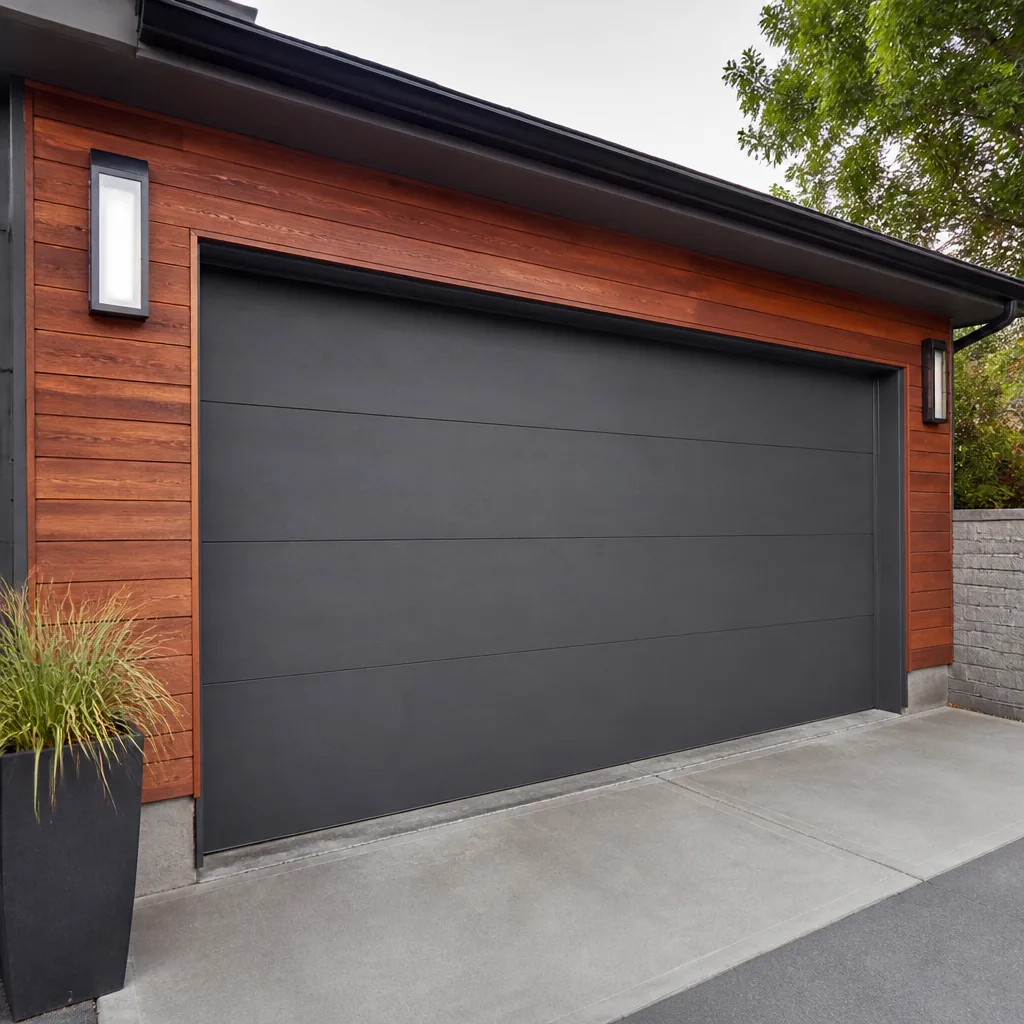 Modern flush
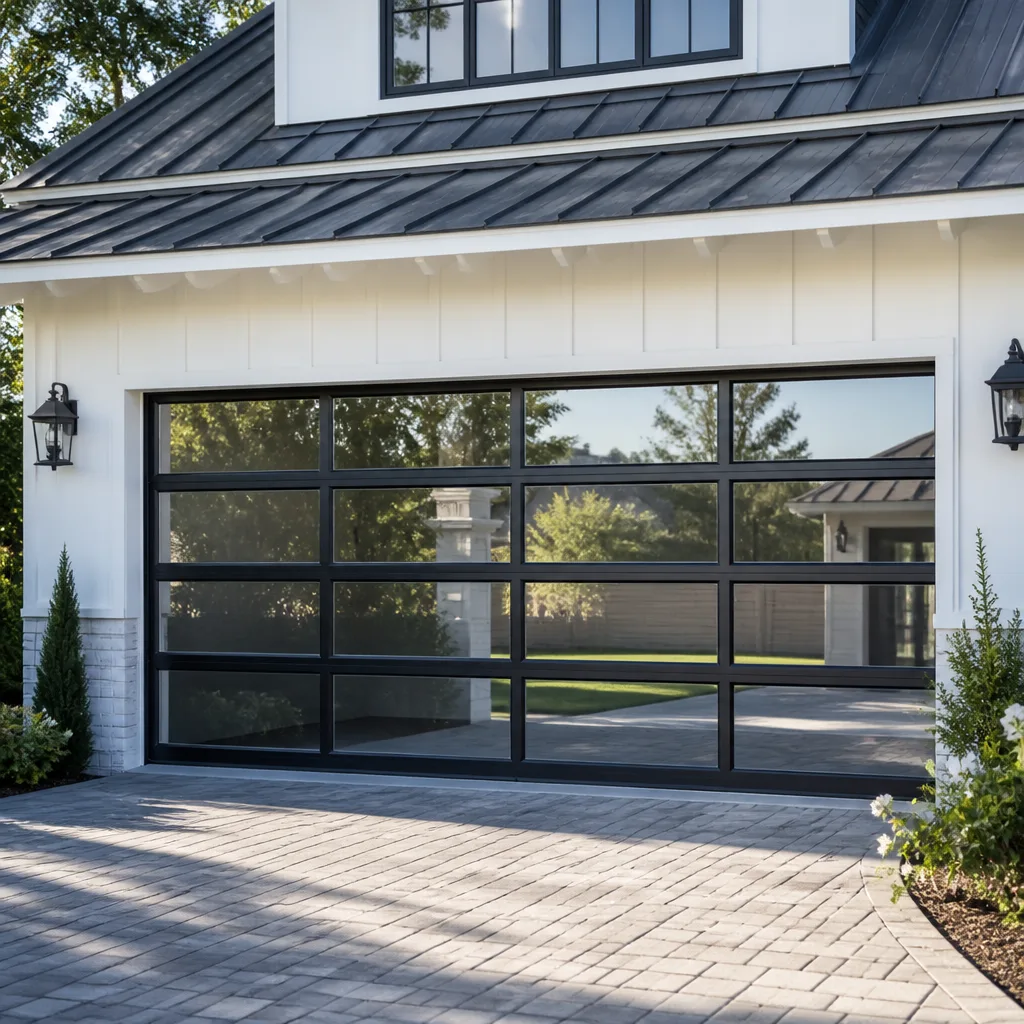 Full-view glass
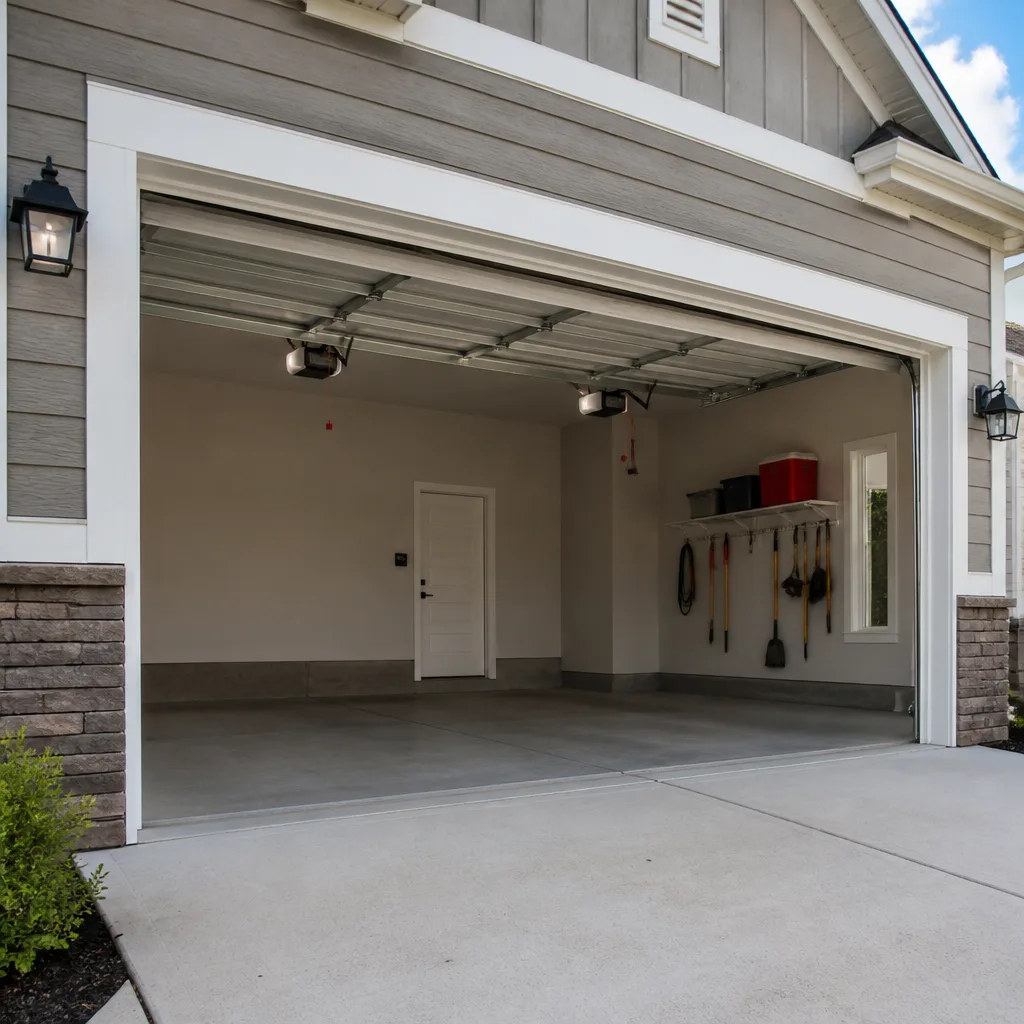 LiftMaster openers
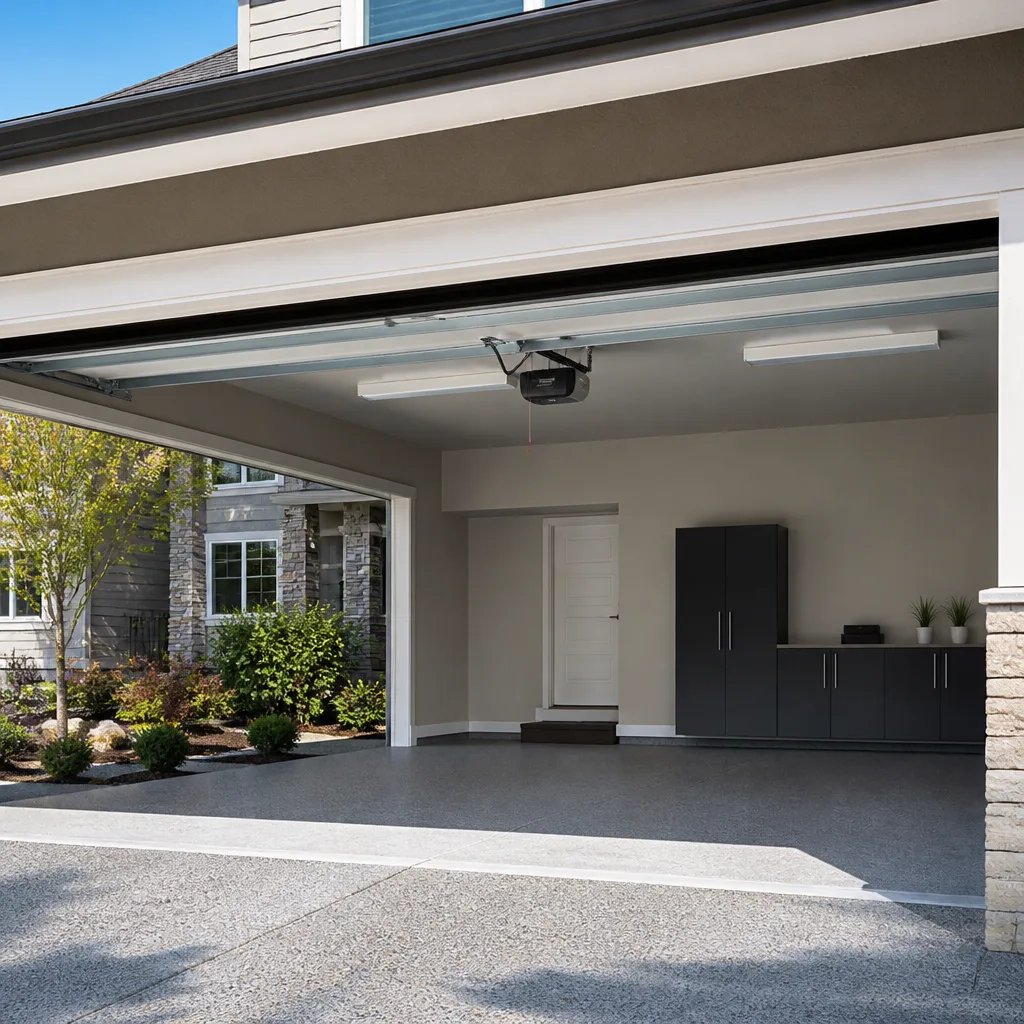 Chamberlain openers
Full 25-point door and opener safety check with every visit - springs, cables, rollers, tracks, and your LiftMaster or Chamberlain opener included
You get a price before we start. It does not change when the pro arrives.
Get your free estimateThe Complete Guide to Garage Doors in Tacoma
Most Tacoma homeowners assume their garage door wears out because of age. In our experience, that’s rarely the real story. The Pacific Northwest’s humidity cycle – wet winters, dry-ish summers, then wet again – works on door materials in a way that a sunny inland climate never does, and it usually starts showing years before the springs finally give. That humidity swing is the thing most national garage door guides skip right over, and it’s the single biggest factor shaping which doors last here and which ones don’t. This guide covers how Tacoma’s climate treats different materials, what the older housing stock in neighborhoods like Hilltop and North End means for door sizing, how City of Tacoma and Pierce County permit rules differ, and how to decide between one specialist and a string of generalists. It’s written for the homeowner who wants the real picture, not a sales pitch.
Quick Answer
A garage door in Tacoma lasts longest when the material is matched to the local humidity cycle, not just the showroom look. Steel with a proper finish and aluminum tend to hold up best in Tacoma’s conditions; solid wood and low-grade wood composites need more attention and repainting. New installations and replacements are measured and scheduled work, priced from a free written estimate, while repairs and emergencies get same-day attention with fast dispatch from 7am to 7pm, Sunday through Friday.
Styles & brands we work with
- Raised-panel steel
- Carriage house
- Modern flush
- Full-view glass
- LiftMaster openers
- Chamberlain openers
Table of Contents
- How Tacoma’s Marine Climate Affects Your Garage Door
- Which Door Materials Hold Up in Tacoma
- Tacoma’s Housing Stock and Non-Standard Door Sizes
- City of Tacoma vs. Pierce County Permit Rules
- Why a Garage Door Specialist Beats a Generalist
- Springs: The Dangerous Repair You Shouldn’t Touch
- Openers and Why Brand Matters
- A Practical Maintenance Checklist for Tacoma Homes
How Tacoma’s Marine Climate Affects Your Garage Door
Tacoma’s climate is defined by humidity swings more than by rain totals. Winters are damp and relatively mild, summers dry out, and that back-and-forth expands and contracts wood, warps cheap composite panels, and works at every hinge point and seal. Steel doors handle it better than wood because the metal moves predictably, but only if the finish stays intact. Once paint or powder coat chips, moisture gets behind it and rust starts from the inside out. That’s the failure mode we see most in Tacoma: a door that looks fine for years, then suddenly shows bubbling paint and rusty seams along the bottom section.
Condensation is the second issue. Garages here often run cooler than the house and hold more moisture, so the inside face of a door collects condensation during temperature swings. Over time that attacks the bottom panel and the hardware first, because the bottom section sits closest to the wet slab. Rubber weather seals and bottom astragal strips also degrade faster in this cycle, which lets even more moisture in.
The practical takeaway:
- Inspect the bottom section and the seams along each panel every season.
- Touch up any paint chip on a steel door before winter; a small chip becomes rust in one wet season.
- Check the bottom seal and side weatherstripping for cracks; they’re the first line of defense against moisture.
- Keep the door hardware – hinges, rollers, torsion tube – lubricated so it doesn’t seize in damp months.
- Watch for condensation on the interior face after cold nights; it’s a sign the garage needs better ventilation or insulation.
None of this requires a specialist to fix unless there’s already damage, but understanding the cycle explains why a door that lasted twenty years somewhere drier might not last as long in Tacoma without attention.
Which Door Materials Hold Up in Tacoma
The material that looks best on a showroom floor isn’t always the one that survives here. Showrooms are climate-controlled and dry; Tacoma garages are not. Here’s how the common options actually behave in this market.
- Steel: The best all-around choice for most Tacoma homes. It’s strong, handles humidity well when the finish is intact, and is easy to repaint when it isn’t. Insulated steel panels also help with the condensation issue. Watch the bottom section for rust.
- Aluminum: Light, rust-resistant, and popular for full-view glass doors. Aluminum won’t corrode the way steel does in humidity, which makes it a reasonable pick for homeowners who want a modern look. The trade-off is lower insulation value and less rigidity on wider spans.
- Wood composite: Looks great and mimics wood grain. Quality composites hold up reasonably well, but cheaper ones swell and delaminate under repeated wet-dry cycles. If you go composite, buy a reputable brand and keep the finish sealed.
- Solid wood: Beautiful and expensive, and the highest-maintenance choice in Tacoma. Wood needs regular sealing and repainting to survive the humidity swing. Homeowners who love the look should budget for that upkeep.
- Fiberglass: Doesn’t rust or warp and handles moisture well. It tends to be lighter and can crack under impact, but it’s a solid option for a low-maintenance door.
In our experience, the practical ranking for Tacoma – balancing durability, insulation, and upkeep – runs insulated steel first for most homes, aluminum for modern glass looks, and wood or wood composite only when you’re ready to maintain the finish. If you’re weighing a new door, garage door installation starts with a free measure so the estimate reflects your actual opening, not a generic size.
Tacoma’s Housing Stock and Non-Standard Door Sizes
A lot of Tacoma’s housing was built between the 1950s and 1980s, and that timeline matters when you’re replacing or repairing a door. Neighborhoods like Hilltop and North End have plenty of mid-century and older homes where the garage opening isn’t a standard modern dimension. Builders of that era didn’t always use today’s common widths, and some garages were added or modified over the years. The result is that a “standard size” door off the shelf may not fit, and measuring carefully is the difference between a clean install and a return.
What this means in practice:
- Measure the opening in three places – top, middle, and bottom – because older frames are often out of square.
- Check the headroom above the opening and the side clearance; older garages sometimes have tight clearances that limit door types.
- Look at the existing track and spring system; if it’s original to an older home, replacement may mean updating the whole assembly, not just the panel.
- Note any alley access or setback constraints; some Tacoma properties have tighter driveways and approach angles than newer builds, so door swing and travel clearances matter.
- Confirm the opening height – older single-car garages sometimes sit lower than modern standard, which affects the door you can safely install.
For older homes, a proper measurement by a technician who works Tacoma’s neighborhoods regularly saves a lot of guesswork. A door that’s slightly off-size can fail to seal, which defeats the purpose in this climate.
City of Tacoma vs. Pierce County Permit Rules
One of the most overlooked parts of a garage door project is the permit question, and in Tacoma the answer depends on where you live. Properties inside the City of Tacoma follow the city’s permitting process, while addresses in unincorporated Pierce County fall under the county’s rules. The two aren’t identical, and a replacement or structural change that’s routine in one jurisdiction may need a permit in the other. A simple like-for-like panel swap is usually treated differently than changing the door size, altering the opening, or adding a new opener with electrical work.
Rather than guess, the reliable move is to ask the local building department directly. They can tell you whether your specific project needs a permit, what the inspection requirements are, and any documentation they’ll want. It’s a phone call, and it’s far cheaper than discovering a problem at resale or when an inspector flags unpermitted work.
A few practical points:
- Confirm which jurisdiction your address falls in before you plan the project.
- Ask whether a like-for-like replacement is exempt; many simple swaps are.
- If you’re changing door size or the opening, expect more scrutiny and get the permit sorted first.
- Electrical work tied to a new opener should follow local code; a licensed electrician or the installer can advise on what’s required.
- Keep records of any permits and inspections; they matter when you sell.
Why a Garage Door Specialist Beats a Generalist
Garage doors are their own trade. The springs hold tremendous stored force, the opener electronics are specific, and the tolerances on track alignment are tight. A general handyman who mostly does drywall and minor plumbing can hang a door, but the tuning that makes it run safely for years is a different skill set. In a market this size, generalist companies treat garage doors as an afterthought between other jobs, which shows up in the details: misaligned tracks, over-torqued springs, and openers wired to the wrong force settings.
A dedicated specialist brings advantages that compound over the life of the door:
- Focus: The whole operation is built around garage doors, so the tools, parts, and training all line up with the job.
- Brand range: Technicians work on whatever is already installed rather than pushing a proprietary system. We service LiftMaster, Chamberlain, Genie, Clopay, Amarr, Wayne Dalton, Craftsman, and Raynor.
- Safety knowledge: Spring work and opener force settings require training; a specialist knows the failure modes and how to prevent them.
- One call for everything: Repair, opener repair, spring replacement, new installation, and emergency response all sit under one trade, so you’re not chasing a second company when something else goes wrong.
For a repair or a tricky opener issue, calling a specialist first usually saves time and rework. If your door is acting up, garage door repair is where most homeowners start, and a free estimate confirms what’s actually wrong before anyone recommends a fix.
Springs: The Dangerous Repair You Shouldn’t Touch
Garage door springs are under extreme tension, and they store enough energy to cause serious injury if released wrong. This is the one garage door job where the honest advice is simple: don’t do it yourself. A torsion spring – the kind mounted on the shaft above the door – carries hundreds of pounds of force wound into a coil a few inches wide. When a spring breaks, the door becomes dangerously heavy and can drop. A trained technician uses the right winding bars and knows how to release the tension safely.
Warning signs a spring is failing or has failed:
- The door is suddenly very heavy to lift by hand.
- You hear a loud bang from the garage and the door won’t open.
- There’s a visible gap in the spring coil.
- The door opens a foot or two and stops, or rises unevenly.
- The door slams down rather than lowering smoothly.
If you notice any of these, keep hands and children clear of the door and call a technician. Spring replacement is a named service for us because it’s the most mechanically hazardous repair in the trade and needs trained, equipped technicians, not a generalist with a ladder. We quote the price before any work starts, so there’s no surprise when the invoice arrives. Most springs are replaced as a matched pair, and a pair costs roughly twice the single-spring rate, so ask for the estimate to spell out both.
Openers and Why Brand Matters
Opener problems are the second most common reason homeowners call us. The good news is that most major brands are serviceable, and a specialist can diagnose and fix most issues without replacing the whole unit. The common names – LiftMaster, Chamberlain, Genie, Craftsman, Raynor – all show up in Tacoma garages, and each has its quirks. LiftMaster and Chamberlain share a lot of parts and programming logic; Genie and Craftsman have their own. Knowing those differences turns a “replace the opener” guess into a targeted repair.
When an opener is failing, the usual suspects are:
- Safety sensors misaligned or dirty – the most common cause of a door that won’t close. Clean the lenses and check alignment first.
- Force settings drifted – a door that reverses for no reason often needs the opener’s force and travel limits recalibrated.
- Remote or keypad not working – often a battery, a lost pairing, or a logic board issue; reprogramming solves most.
- Motor straining or noisy – could be a failing gear, a worn drive belt, or a door that’s out of balance putting extra load on the opener.
- Wall control dead – wiring or a control board fault.
For an opener that’s stopped responding, garage door opener repair is usually quicker and cheaper than replacement. If the opener is genuinely at end of life, a new one can be installed as part of a scheduled visit, quoted up front.
A Practical Maintenance Checklist for Tacoma Homes
A little routine attention goes a long way in this climate. This isn’t about turning yourself into a technician – it’s about catching the small things before they become repairs. Run through this list a few times a year, and before and after the wet season.
- Lubricate the moving parts. Hinges, rollers, and the torsion tube benefit from a garage-door lubricant; avoid heavy grease that traps grit.
- Check the balance. Disconnect the opener and lift the door halfway by hand; it should stay put. If it falls or rises, the springs or cables need attention.
- Inspect the seals. Look at the bottom weather seal and the side and top weatherstripping for cracks or gaps.
- Test the safety reverse. Put a small object in the door’s path and close it; the door should reverse. If it doesn’t, the sensors or force settings need adjusting.
- Look for rust and paint damage. Touch up chips on steel doors before the wet season.
- Tighten hardware. Check bolts on the track brackets and hinges; vibration loosens them over time.
- Clear the tracks. Wipe away debris and check that tracks are straight and aligned.
If any step turns up something you can’t safely address – especially anything involving springs or cables – stop and call a technician. For a deeper look at repair options, the Tacoma garage door professionals at our team can walk you through what’s urgent and what can wait.
Common Mistakes to Avoid
- Choosing a door by showroom looks alone. Solid wood and cheap composites look great in a dry showroom but demand more upkeep in Tacoma’s humidity cycle. Match the material to the climate, not just the display.
- Trying to replace a spring yourself. Springs are under extreme tension and can cause serious injury. This is a job for a trained technician with the right tools.
- Skipping the permit question. City of Tacoma and unincorporated Pierce County have different processes. Ask the local building department before you start, not after.
- Assuming a standard size will fit. In older Tacoma neighborhoods like Hilltop and North End, openings are often non-standard. Measure carefully or have a technician measure.
- Calling a general handyman for a spring or opener problem. Garage doors are a specific trade; a generalist can leave the door unsafe or mis-tuned.
- Ignoring small paint chips and seal cracks. In this climate, a chip becomes rust and a cracked seal lets moisture in. Fix the small stuff before winter.
- Letting a straining opener keep running. A door that’s out of balance puts extra load on the opener; fixing the balance saves the motor.
See the difference
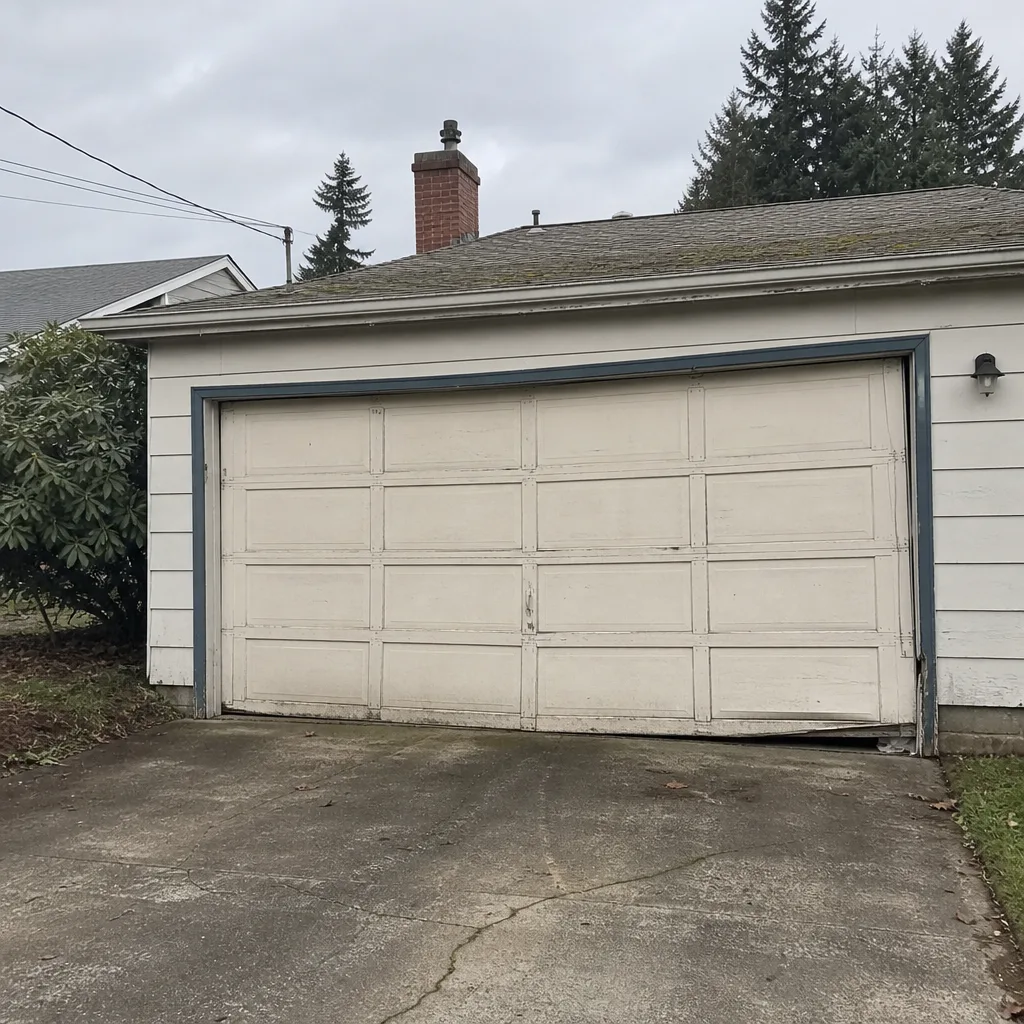 Before
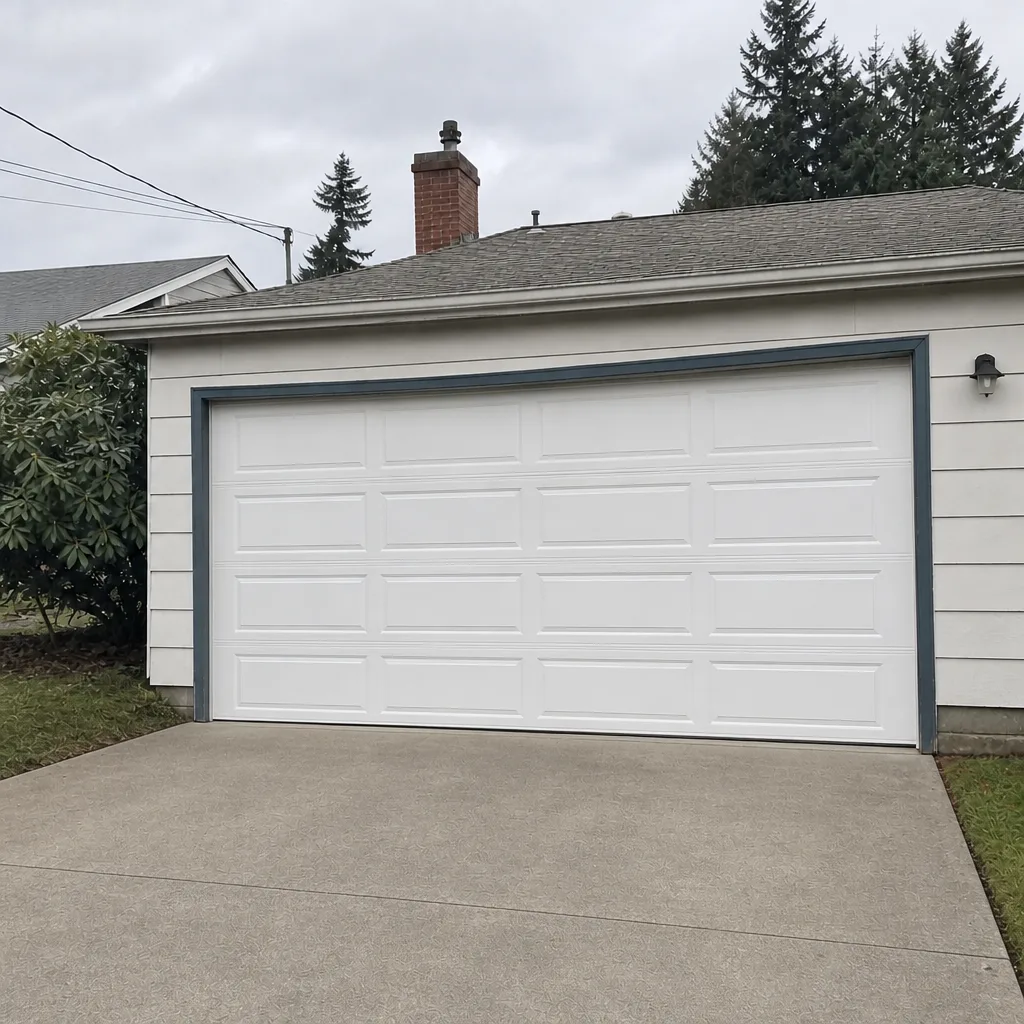 After
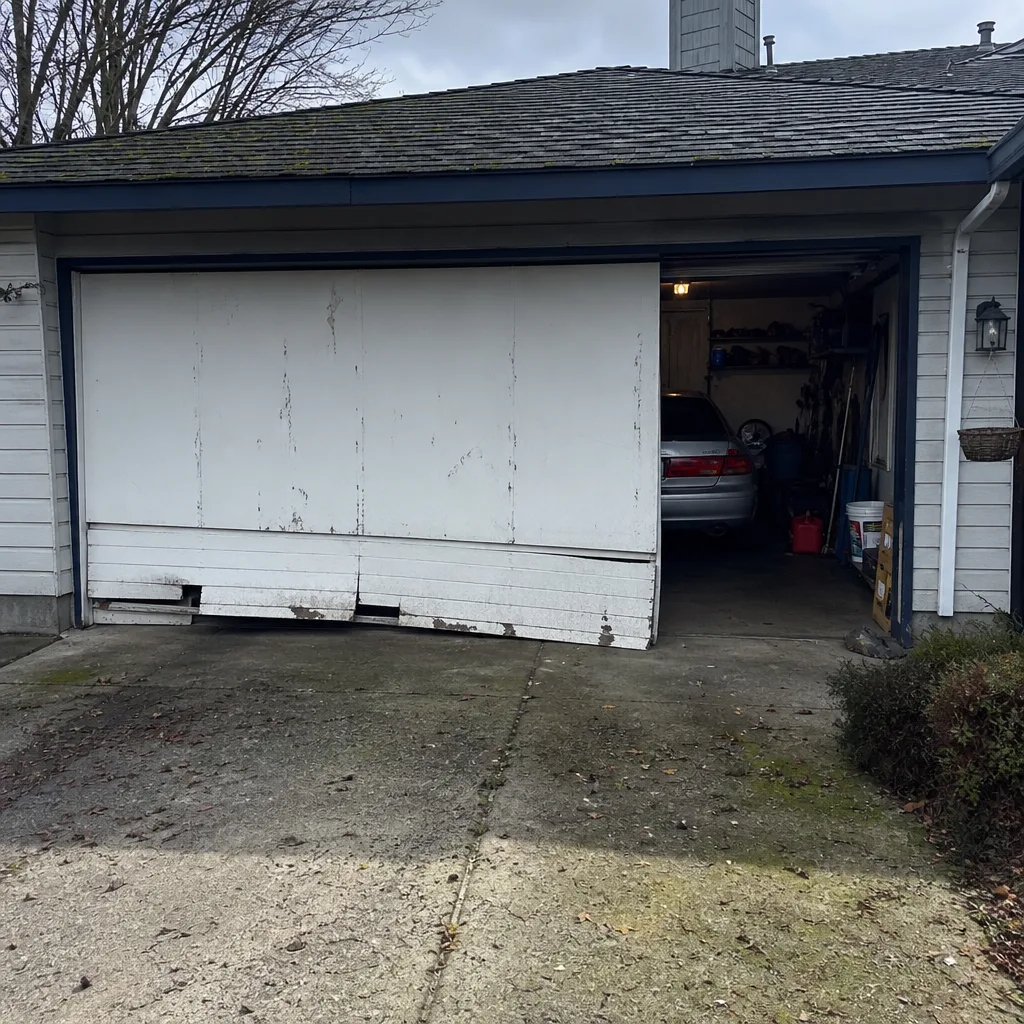 Before
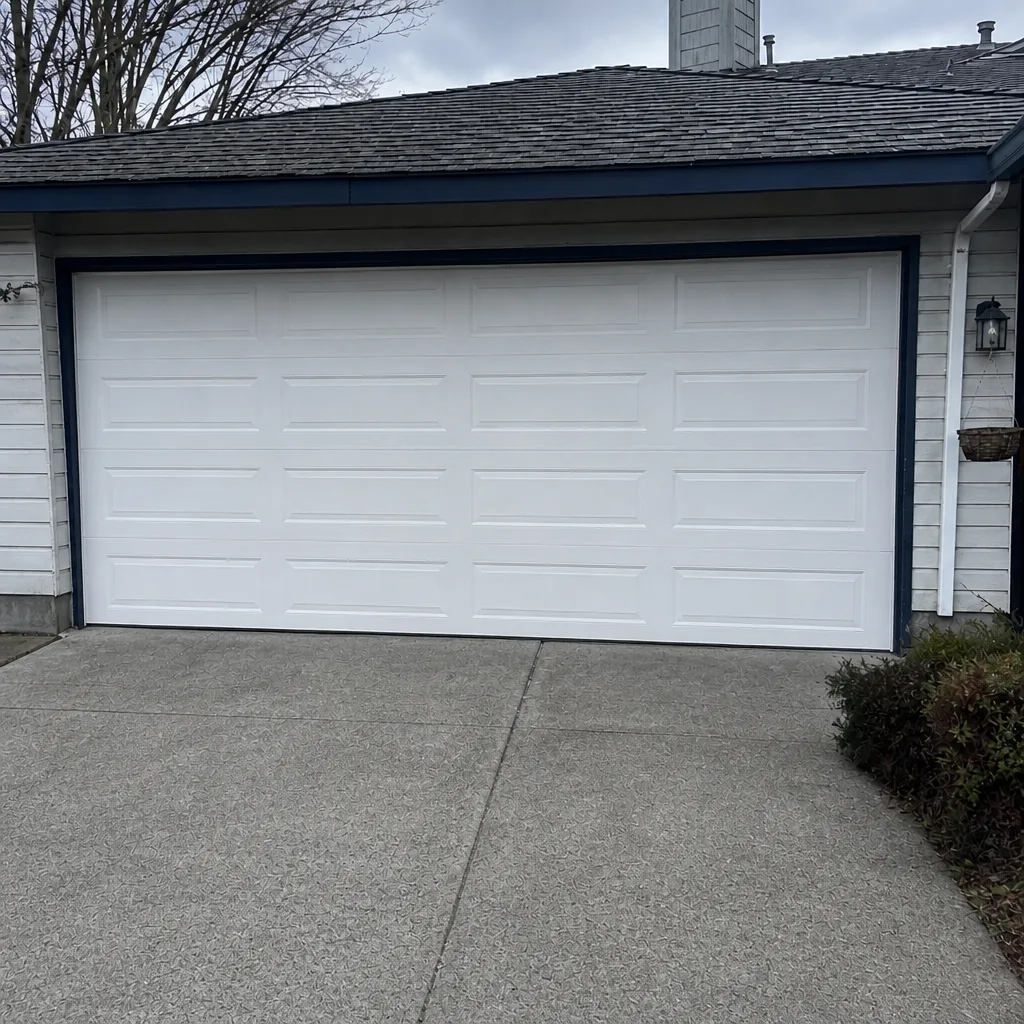 After
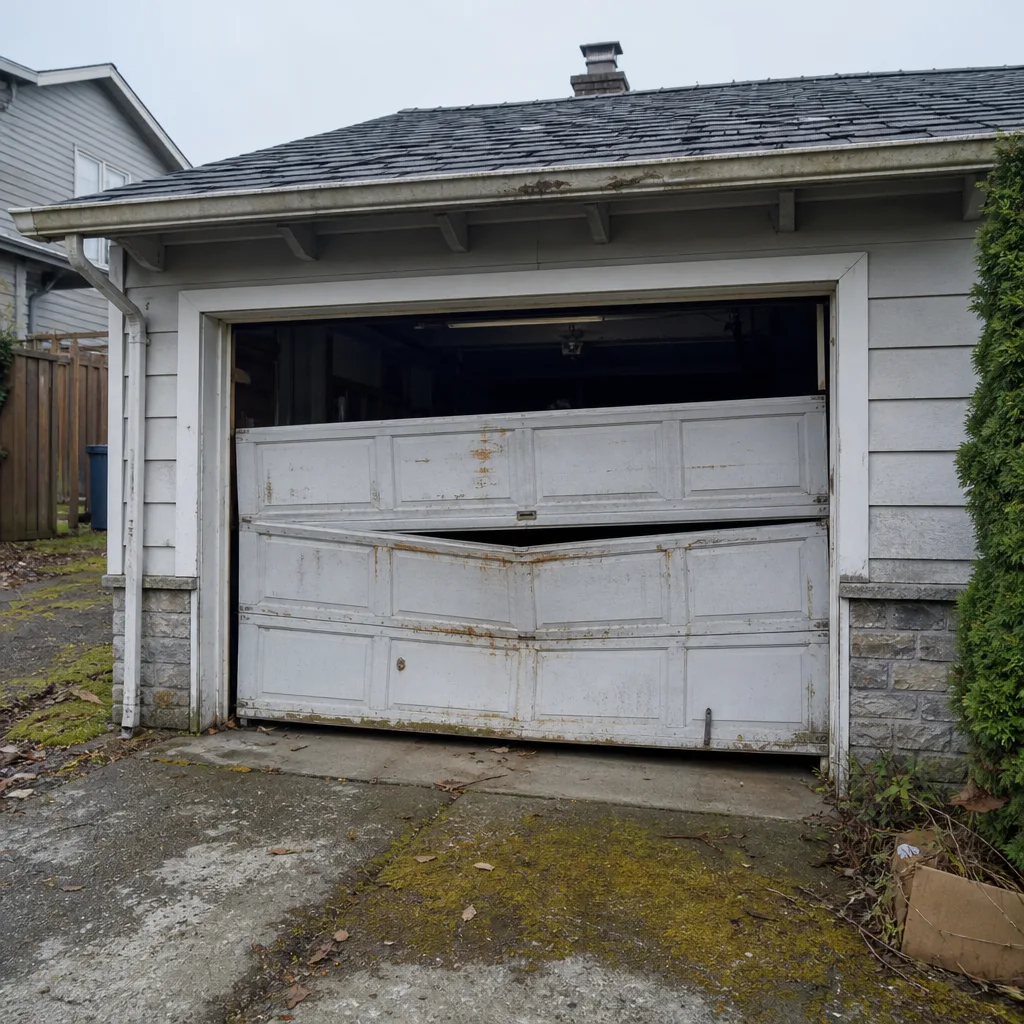 Before
 After
When to Call a Professional
Some garage door issues are safe to handle yourself – a dead remote battery, a dirty sensor lens, a squeaky hinge that needs lubricant. Others should go straight to a technician. Call a professional if the door is suddenly heavy to lift, if you hear a bang and the door won’t open, if the door reverses for no reason, if it’s hanging crooked or off its tracks, or if the opener strains, grinds, or won’t respond after basic troubleshooting. Any spring or cable problem, any structural damage, and any door that’s stuck open or shut and compromising your home’s security all warrant a call. For urgent situations, we’re structured for emergency response: We answer 24/7. Fast dispatch from 7am to 7pm, Sunday through Friday. Tacoma Garage Door Repair Pros offers free estimates in Tacoma – call (844) 709-1359 and we’ll confirm the problem and give you a written price before any work starts.
Frequently Asked Questions
A well-maintained steel or aluminum door in Tacoma commonly lasts many years, but the humidity cycle means the finish and seals need attention along the way. Wood doors and cheap composites tend to need more upkeep here than in drier climates. Routine lubrication, paint touch-ups, and seal checks are what stretch a door’s life.
It depends on your address and the scope of the work. City of Tacoma properties follow the city’s permitting process, while unincorporated Pierce County falls under the county’s rules, and a like-for-like swap is often treated differently than a size change. The reliable answer comes from your local building department, so call them with your specific project before you start.
Insulated steel is the best all-around choice for most Tacoma homes, and aluminum is a solid option for modern full-view looks. Steel handles humidity well when the finish is intact and is easy to repaint. Wood and wood composite look great but need more sealing and repainting to survive the wet-dry swing.
For most repairs, yes – same-day service is available. We answer 24/7, with fast dispatch from 7am to 7pm, Sunday through Friday. A call outside dispatch hours is booked into the next opening. Call (844) 709-1359 for an exact quote; estimates are free.
No. The price is quoted and agreed before any work starts, and the written estimate sets the final price. If the technician finds something different once on site, you’ll hear about it and approve any change before work continues. Call (844) 709-1359 for a free estimate.
Garage door springs are under extreme tension and can cause serious injury if released incorrectly. A torsion spring stores hundreds of pounds of force, and the door can drop suddenly when one fails. This is a job for a trained technician with the right winding tools. Call (844) 709-1359 and we’ll take care of it safely.
The Bottom Line
Tacoma’s humidity cycle, not age, is usually what wears a garage door down, and the right material and upkeep make the biggest difference. Insulated steel and aluminum hold up best here; wood and cheap composites need more attention. Older neighborhoods like Hilltop and North End often have non-standard openings, so measuring carefully matters, and City of Tacoma versus Pierce County permit rules should be checked before any project. Springs and cables are dangerous enough to leave to a specialist, and a dedicated garage door trade serves you better than a generalist. For repairs, opener issues, spring work, installation, or an emergency, call (844) 709-1359. We answer 24/7. Fast dispatch from 7am to 7pm, Sunday through Friday. Estimates are free.
Written by the team at Tacoma Garage Door Repair Pros.